|
Natural History on Interstate 85: The Schiele Museum
Story and Photographs
by Tom Straka
Only a couple of miles off of Interstate 85, near Charlotte, in
Gastonia, is a wonderful museum: The
Schiele Museum of Natural History.
It is the perfect way to take an Interstate break, with the only
problem being it takes several hours minimum for an adequate
visit.
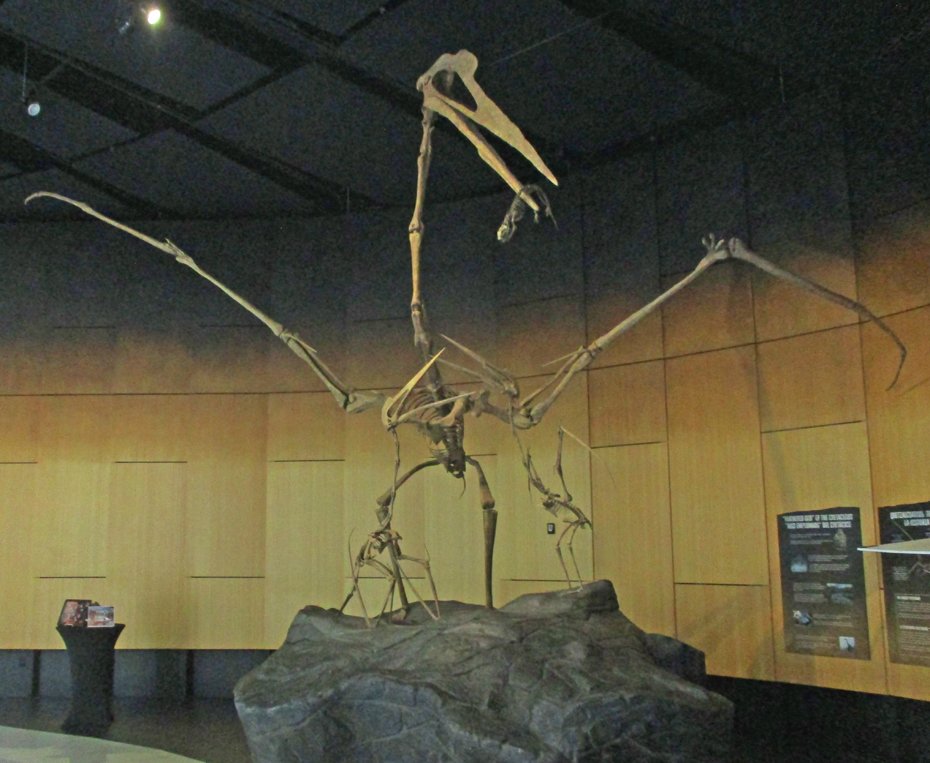
The
focus
of the Schiele Museum is inspiring curiosity and understanding
of science and the natural world, with natural history indoor
galleries (including North American wildlife and wildlife
habitats, North Carolina natural history, dinosaurs and
paleontology, gems and minerals, native live animals, and a
planetarium) complemented by immersive outdoor learning spaces (including the farm, Catawba Native American village, nature
trail, and gardens). PBS Charlotte produced a half-hour
overview
of the museum.
The museum dates to 1961 when Bud and Lily Schiele founded the
Gaston County Museum of Natural History (three years later it
gained its current name). The couple donated many of the early
collections from their collection of wildlife, gems and
minerals, and Native American pottery and jewelry. Starting in a
small building, by 2001 it had earned Smithsonian Affiliate
designation. From that small building it has grown into a major
museum with 60,000 square feet inside the museum and a natural
trail that is nearly three-quarters of a mile long.
There is a large group of "animal
ambassadors,"
many who came from rehabilitation facilities and could not be
released back into the wild. The museum cares for them and
allows them to serve as ambassadors-interacting with visitors to
promote understanding about their species and their habitats in
the natural world. The ambassadors include Cha Cha the corn
snake, Noodle the Virginia opossum, Bella the Barbados
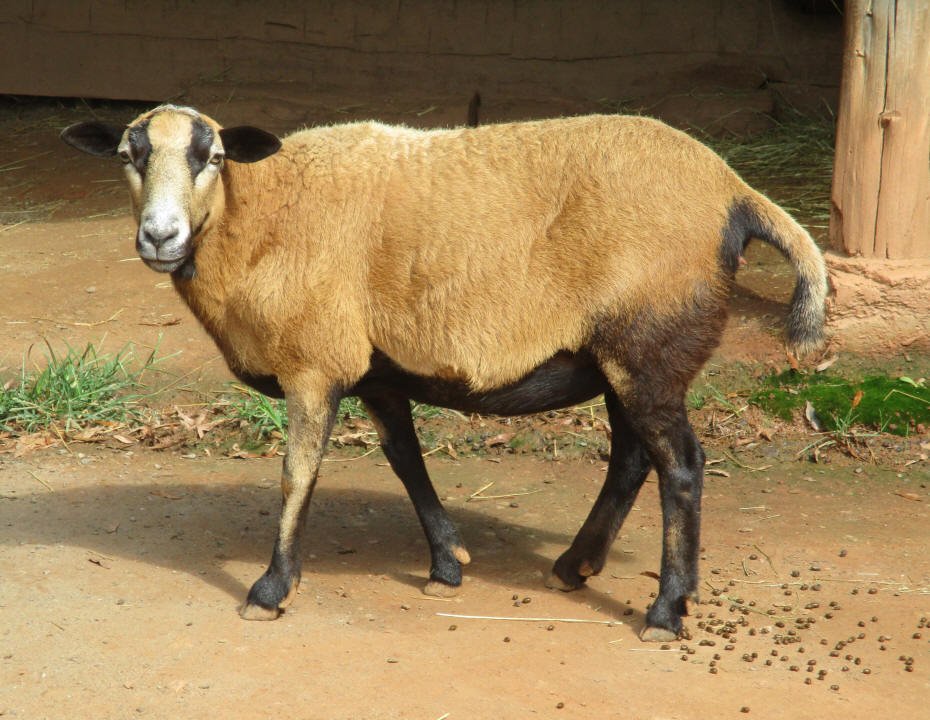
blackbelly sheep, Hedwig the eastern screech owl, Flapjack the
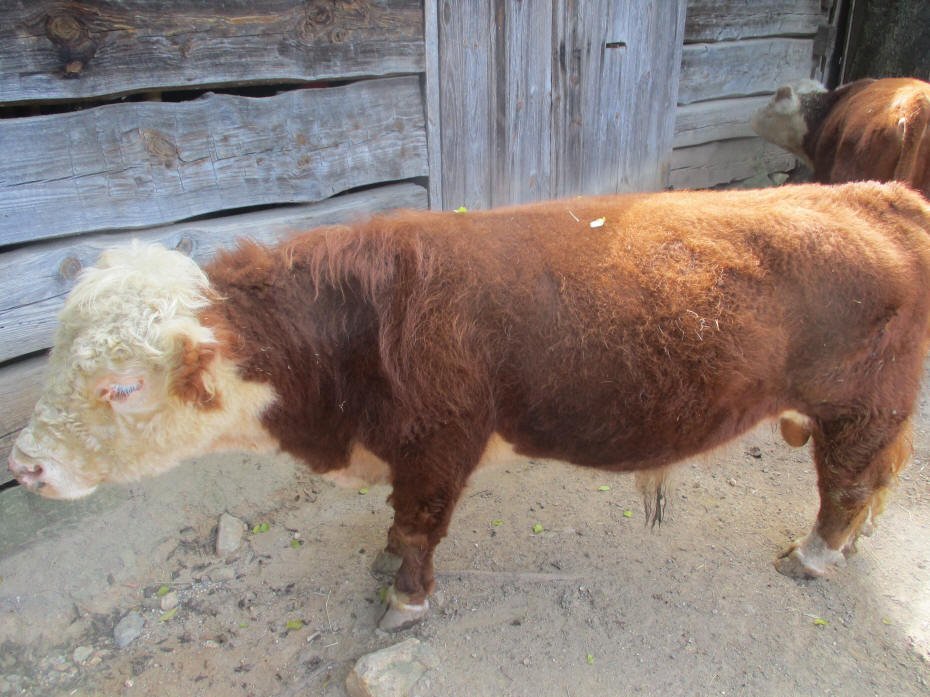
eastern spiny softshell turtle, Mike and Lucky the mini-Hereford
steers, Albert the eastern collared lizard, and Spike the
alligator snapping turtle.
While most of the exhibits obviously stress natural history, to
me the American Indian exhibit was most interesting and will be
described in the most detail. The Planetarium is one of the
largest in North Carolina and operates on a schedule that
precluded including it as part of this "tour" of the museum.
Henry Hall of the American Indian
The North American Indian exhibit depicts the major tribal
groups in the new world and colonies of North America. It
includes artifacts, weapons, ornaments, tools, and detailed
replicas of traditional dwellings and structures, illustrating
the various cultures of the North American Native. One of the
most impressive of the aspects of the exhibit is full-scale
display figures (museum mannequins) of important Native
Americans from different Indian cultures. Five of my favorites
are below.
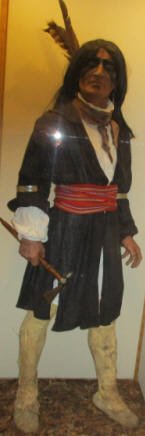
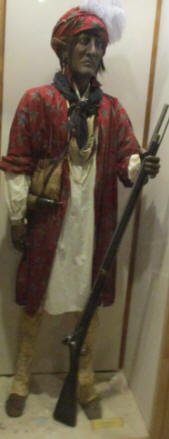
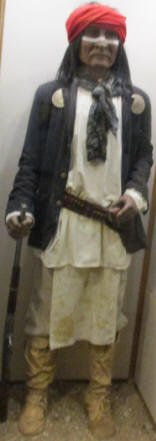
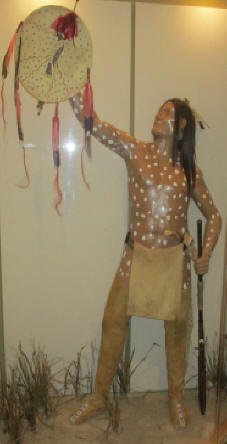
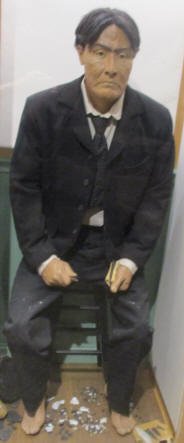
From
left to right, are Tecumseh, Osceola, Geronimo, Crazy Horse, and
Ishi.
Tecumseh
(1768-1813) was a Shawnee warrior. His family was driven west
after the American Revolution. He tried to unify political and
military strategy among Native American tribes from the Great
Lakes to the Southeast. With the outbreak of war in 1812, he
became a British General and led Shawnee and Miami warriors on
raids in Michigan and Ohio. He died fighting Americans in Canada
in 1813.
Osceola (ca. 1802-1837) was a Seminole warrior known for
his involvement in the Second Seminole War. As settlers spread
across the Southeast, he allied with other Seminole chiefs and
resisted the many treaties proposed by the U.S. government.
During the Second Seminole War from 1835-1842, Osceola and his
warriors attacked and evaded the government for years. Under a
flag of truce, he was lured from hiding and imprisoned, dying in
capacity three months later.
Geronimo (1829-1909) was an Apache warrior, leader, and
legend. He is known for Apache raids in Arizona and Mexico, and
as the last Native American leader to surrender to the U.S.
army.
Crazy Horse (1841-1877) was a brilliant leader in the
desperate struggle of the Lakota to resist the loss of lands and
the buffalo culture of the Northern Great Plains tribes. He was
celebrated as a selfless protector of his people and a military
leader, fighting against U.S. government efforts to force his
people on to reservations. One of those efforts was the Battle
of Little Big Horn.
Ishi (1841-1916) was the last Yahi. He lived nearly alone
in the mountains of Northern California after his people, the
Yahi, were massacred by settlers in the 1860s. He became a
national sensation as the last of his kind when he wandered into
Oroville, California starving and alone in 1911. The
anthropology department of the University of California took
responsibility for Ishi's welfare, and he spent his remaining
days helping others understand the culture of his lost people.
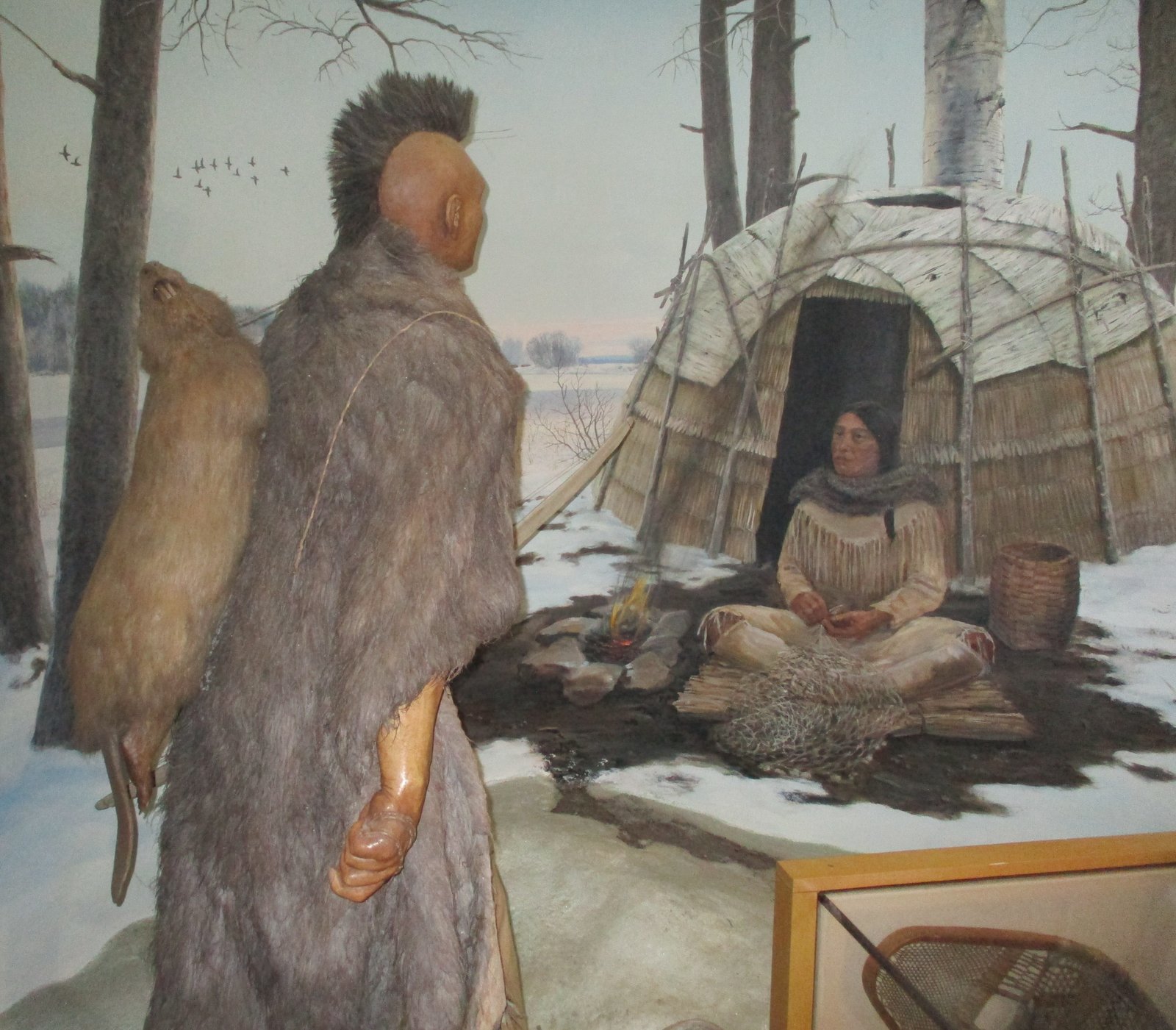
The Ojibwa (Chippawa) and Ottawa (Adawa) lived along the
Great Lakes. Their wigwams of bent birch saplings were covered
by reed mats, skins, or birch bark. In summer, they lived in
large villages where they fished and occasionally grew corn. In
autumn, they departed for their winter hunting grounds where
they remained until spring fishing brought them together again.
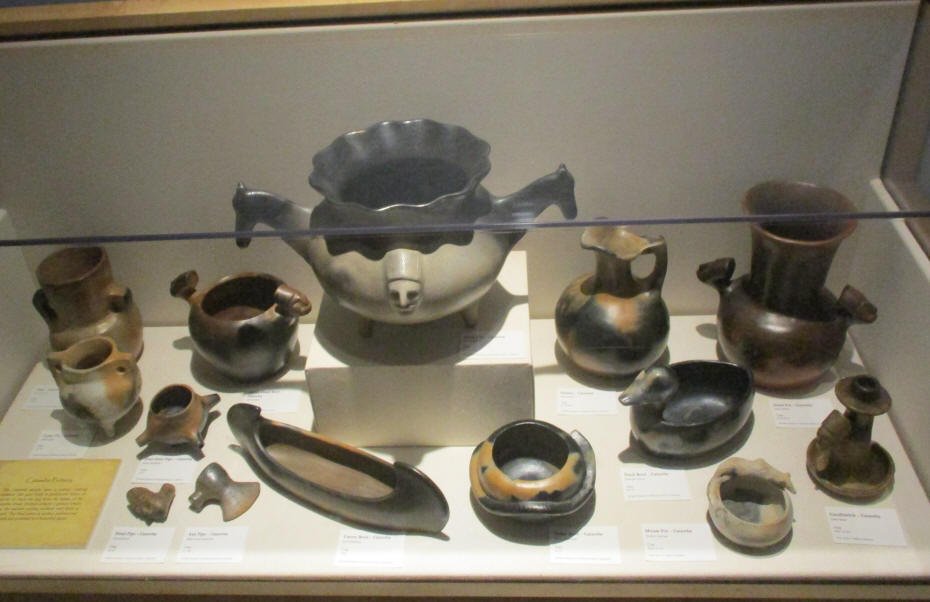
The museum is noted for its Catawba pottery collection.
The museum has one of the largest collections of Catawba pottery
in the world with over 700 pieces. The Catawba lived in the
Piedmont section of South Carolina, North Carolina, and southern
Virgina, centered on the Catawba River Valley. The Catawba
people have a pottery making tradition that goes back to
prehistoric times. A variety of clays are dug from the banks of
the Catawba River, formed without a potter-'s wheel, using the
ancient coiling method, and fired in hot coals. The final piece
is neither painted nor glazed but polished to a beautiful shine.
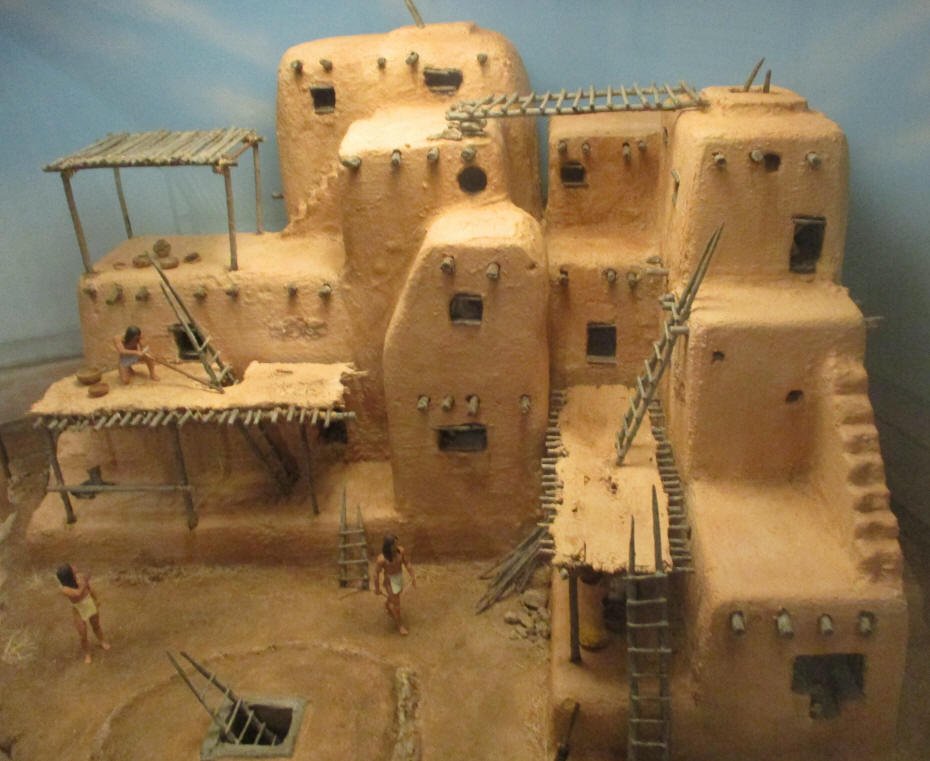
Diorama
of a Southwestern Native American structure.
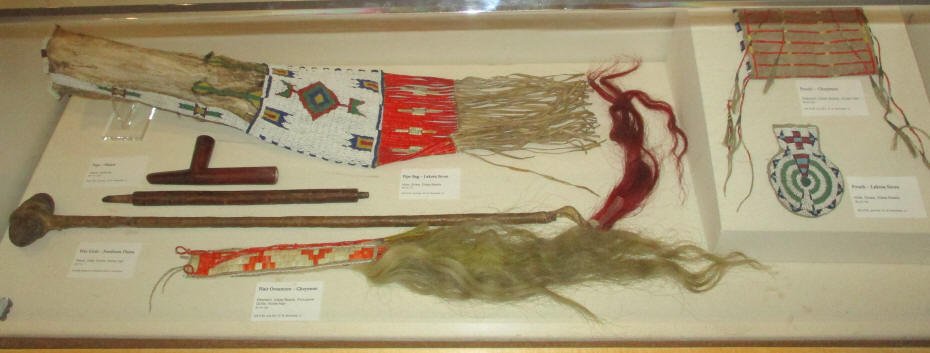
There are many displays of Native American artifacts,
covering all North America.
While not part of this exhibit, the Catawba Indian Village is
certainly related to it. Rather than review it as part of the
Nature Trail, it will be discussed in this section. The Catawba
Indian Village is part of the Schiele Museum-'s Aboriginal
Studies Program complex and is a registered
historical/educational/experimental archaeology site. It
includes reconstructed and simulated structures representing a
sequence of Catawba Indian architectural traditions and lifeways
from the mid-1500s to the turn of the twentieth century.
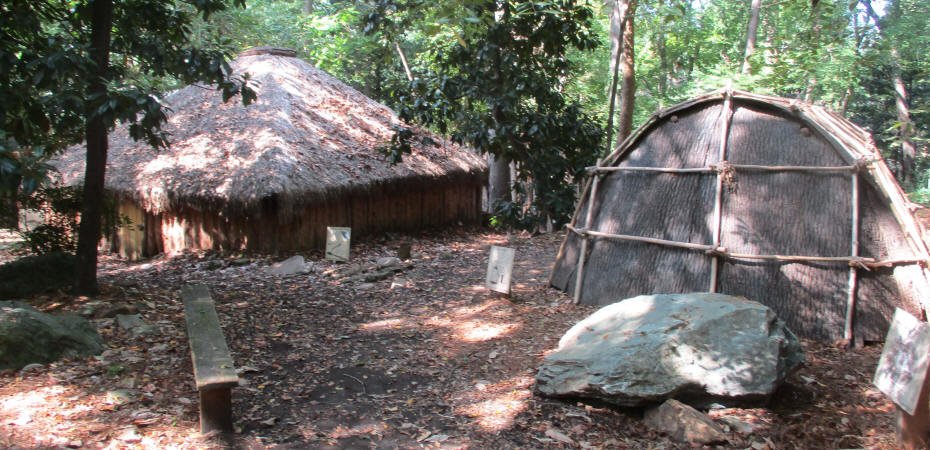
Entering the Catawba Indian Village, showing the town house
and bark house.
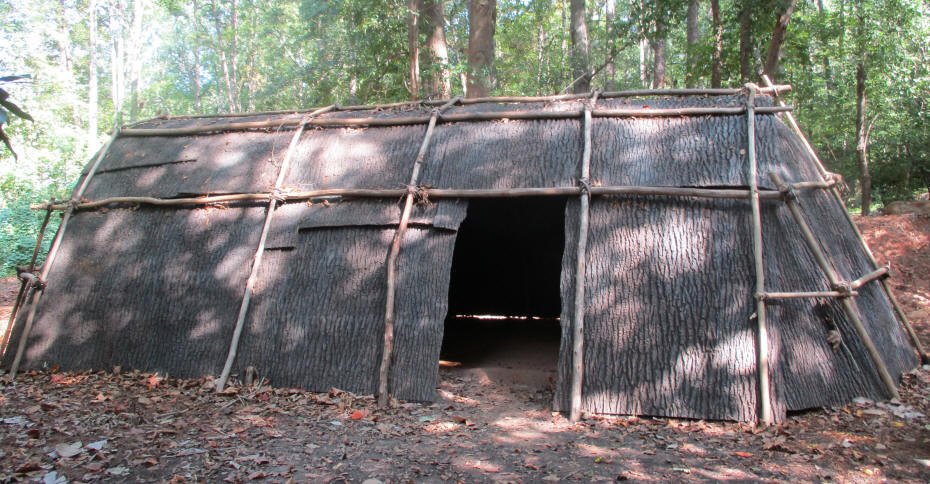
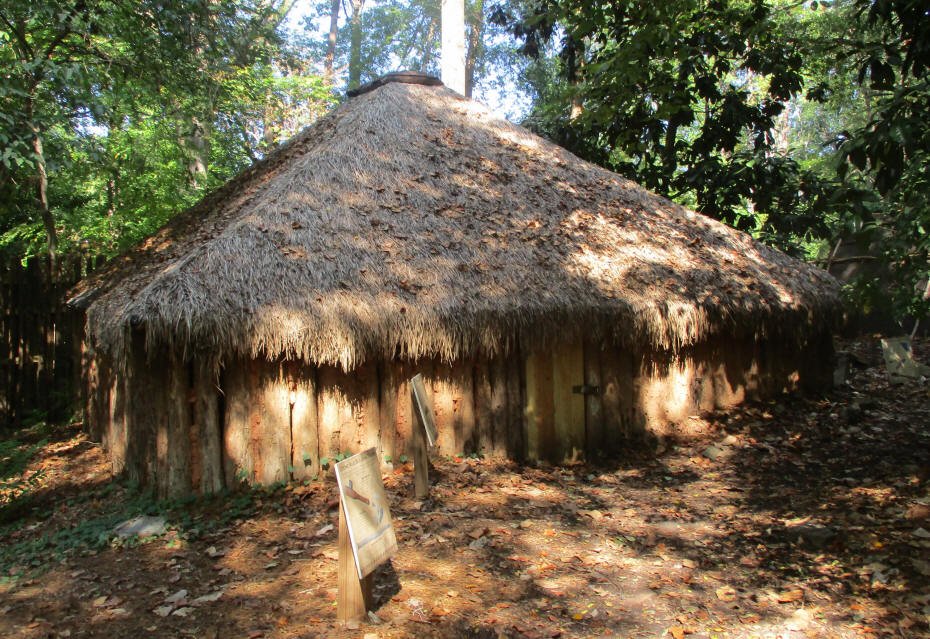
Bark houses like this were commonly found along the East
Coast of North America, from the Carolina Piedmont region to New
England. These innovative houses were often constructed using
the bark of the tulip popular tree to provide protection from
the elements. The Catawba and other Piedmont Siouan tribes were
likely living in homes similar to this when the first Europeans
arrived in the mid-17th century.
According to historical accounts, they continued living in bark
houses until the 18th century when
log homes began to gain popularity.
According
to historical accounts from the 17th
and 18th centuries, town houses
like this one stood as the governmental, social, and spiritual
centers of many Eastern Woodland villages, including the
Catawba. Here, the council made important decisions and visitors
were housed and entertained.
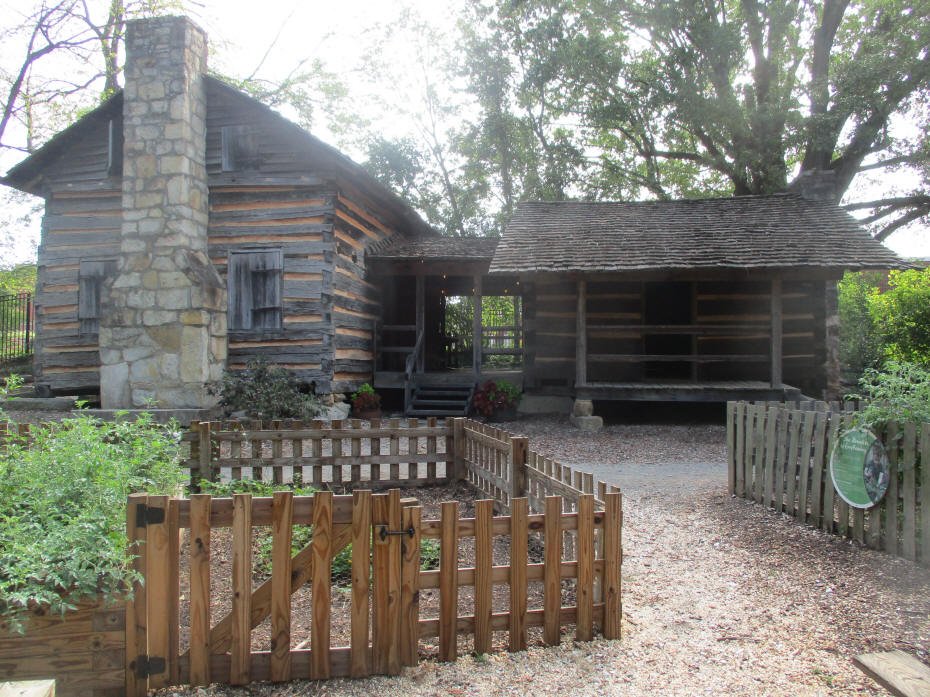
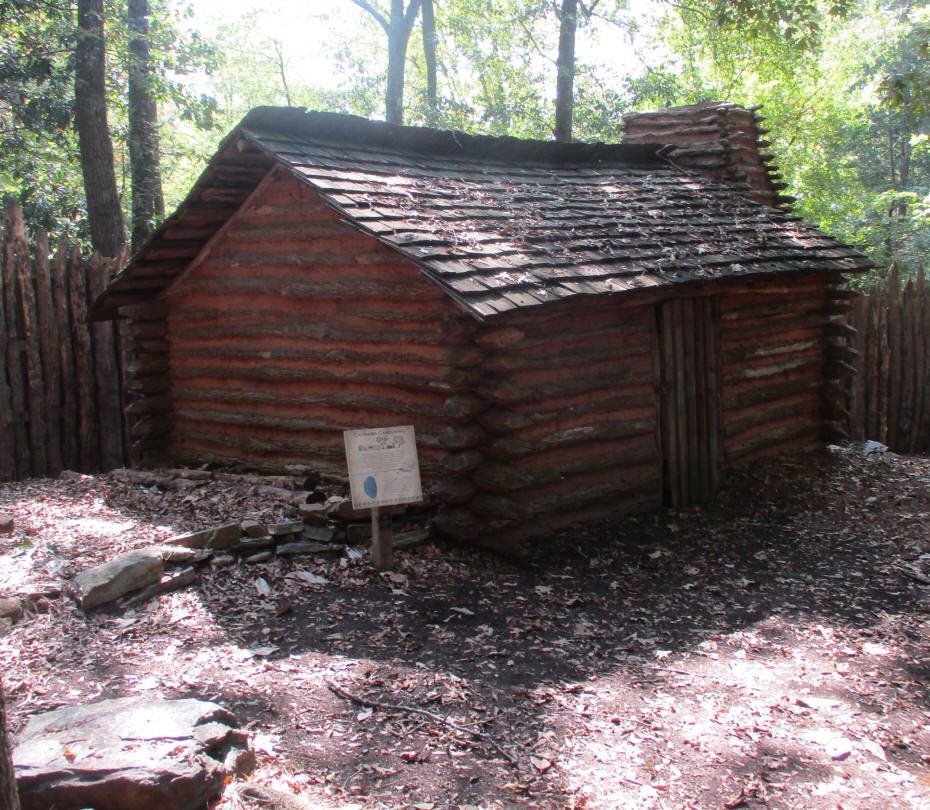 Early
log houses reflect the rapid change that the Catawba lifestyle
was undergoing throughout the Scots-Irish and German settlements
of their region in the 18th
century. This house is a native adaption of the log cabins being
built by those settlers. The first Catawba cabins were built of
unhewn logs with shingle roofs and a central smoke hole. These
smoke holes began being replaced with chimneys of stone and logs
in the mid-1700s. Early
log houses reflect the rapid change that the Catawba lifestyle
was undergoing throughout the Scots-Irish and German settlements
of their region in the 18th
century. This house is a native adaption of the log cabins being
built by those settlers. The first Catawba cabins were built of
unhewn logs with shingle roofs and a central smoke hole. These
smoke holes began being replaced with chimneys of stone and logs
in the mid-1700s.
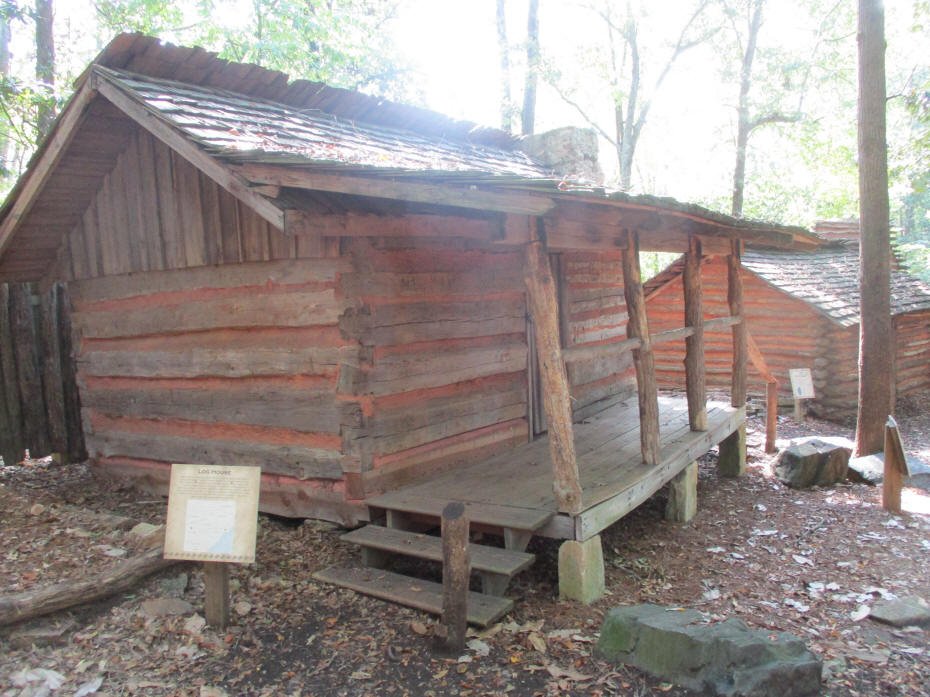 Weakened
by disease, broken treaties, and the loss of tribal lands to
European settlers, many Catawba people moved westward into the
North Carolina mountains where they were greatly influenced by
their Cherokee neighbors. This cabin (ca. 1860) reflects that
time period. It reflects the continued assimilation of the
Catawba People into European settler culture and is similar to
many 19th century homes found in
non-native settlements of the mountains and piedmont. Weakened
by disease, broken treaties, and the loss of tribal lands to
European settlers, many Catawba people moved westward into the
North Carolina mountains where they were greatly influenced by
their Cherokee neighbors. This cabin (ca. 1860) reflects that
time period. It reflects the continued assimilation of the
Catawba People into European settler culture and is similar to
many 19th century homes found in
non-native settlements of the mountains and piedmont.
The Catawba Nation continues to be a force in the region. In the
1990s, their status as a federally-recognized tribe was
reinstated after being terminated in the 1950s. They won a major
court battle over the loss of land suffered as a result of the
Treaty of Nations Ford in 1840. The Catawba reservation, located
near Rock Hill, South Carolina, is situated along the banks of
the Catawba River, on the Nation-'s ancestorial lands. It is the
center of Catawba governmental, cultural, and economic
activities.
Dinosafari
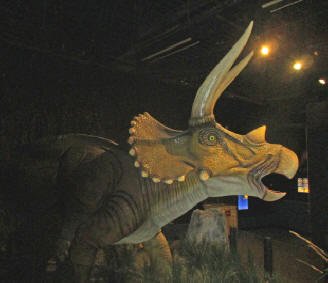
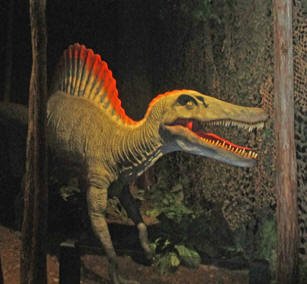
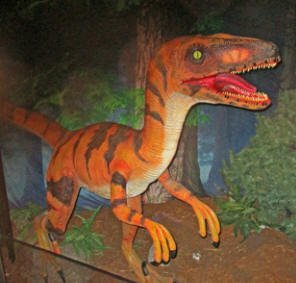
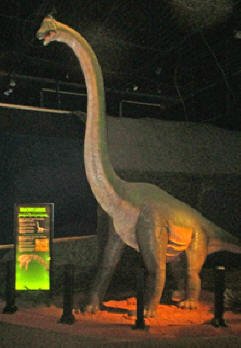
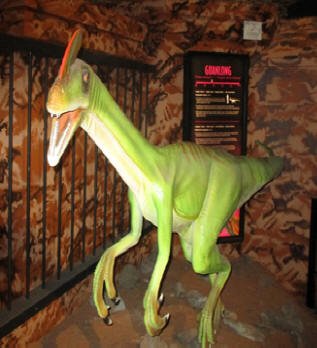
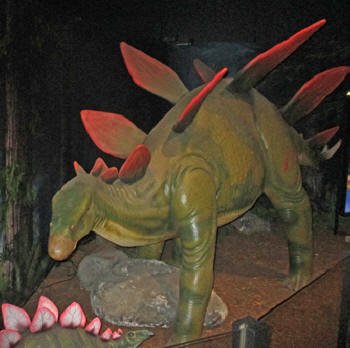
Dinosafari is an interactive journey through the Mesozoic Era.
Visitors walk among full-bodied dinosaur models, including a
charging Triceratops and a stalking Deinonychus. The exhibit
includes actual dinosaur fossils and casts from the museum's
collection that connect the life-sized models to the science of
paleontology, and educational clips from dinosaur documentaries.
Not open when I visited, but soon to open is a museum expansion
debuting the massive Elizabeth Williams Robinson Hall of
Dinosaurs featuring 4,200 square feet of full-scale skeletons,
authentic fossils, and interactive elements.
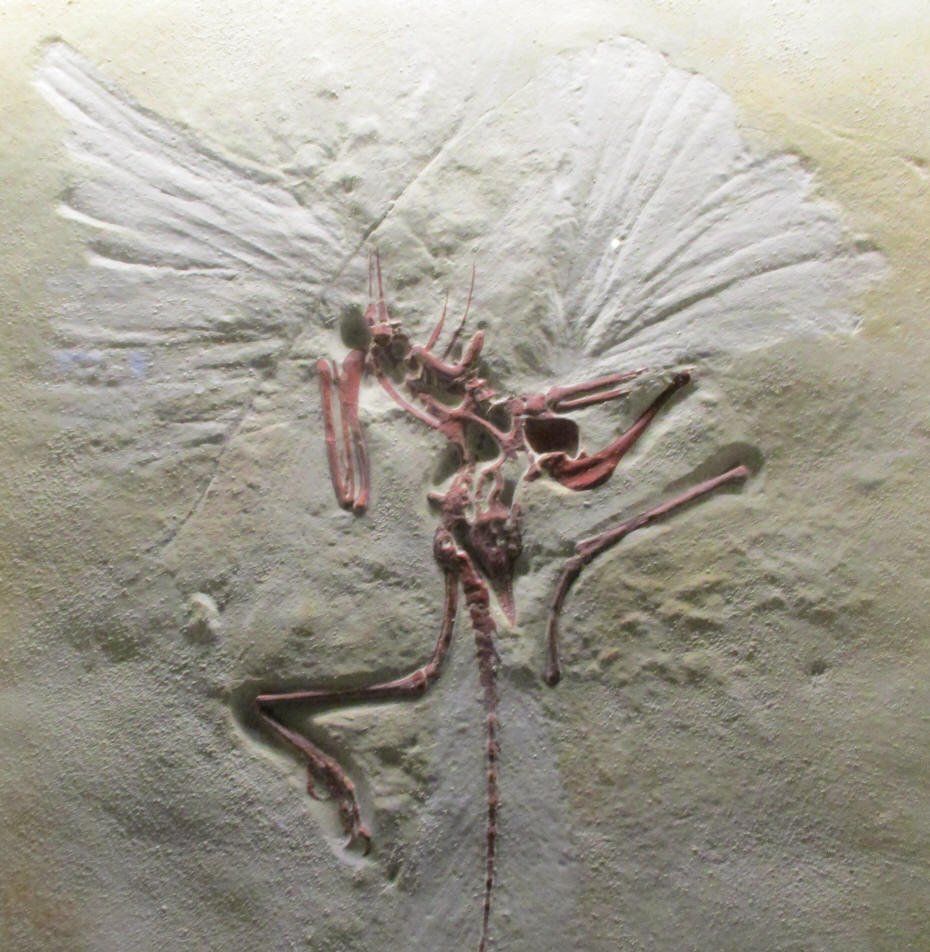 There
are plenty of actual fossils in the exhibit. There
are plenty of actual fossils in the exhibit.
North American Wildlife and Habitats
This is a massive exhibit that covers all of North America. Both
wildlife and wildlife habitat are included. The visitor goes toe
to claw, nose to gill, finger to stinger, and eye to shank with
wildlife at its finest! Dioramas give a true perspective on the
size and scope of North America-'s bears, bison, moose, and elk
along with other mammals, birds, insects, reptiles, and
amphibians.
Visitors experience
the wonders of our ocean floors, the Everglades, the Sonoran
Desert, and the mighty Alaskan tundra. Both children and adults
leave with an appreciation for the majesty and diversity of life
in our North American homeland.
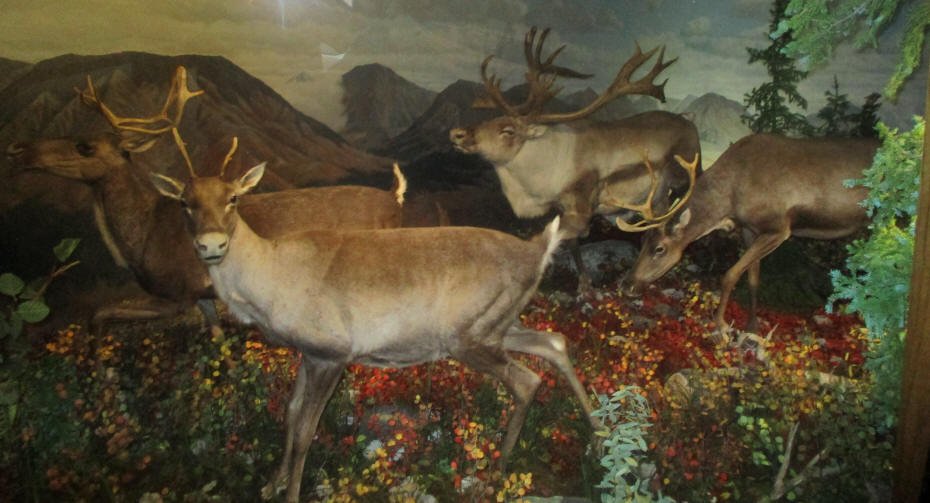 Adapting
to the cold. The caribou is the only deer where both the male
and female have antlers. Living in a herd creates competition
among members for food. In winter, when the female is pregnant
food is scarce, the males shed their antlers giving the females
an advantage over the males in gathering food. The females shed
their antlers in the spring. Adapting
to the cold. The caribou is the only deer where both the male
and female have antlers. Living in a herd creates competition
among members for food. In winter, when the female is pregnant
food is scarce, the males shed their antlers giving the females
an advantage over the males in gathering food. The females shed
their antlers in the spring.
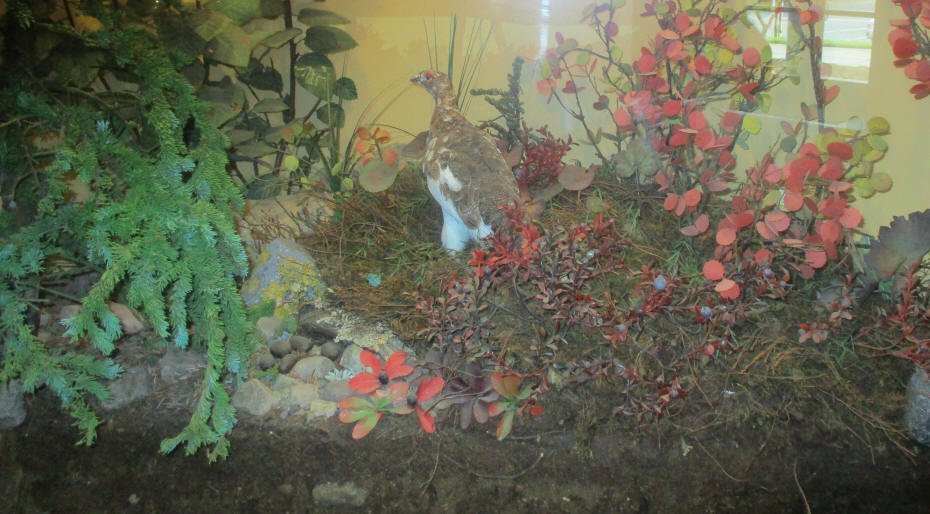 Arctic landscape above the permafrost.
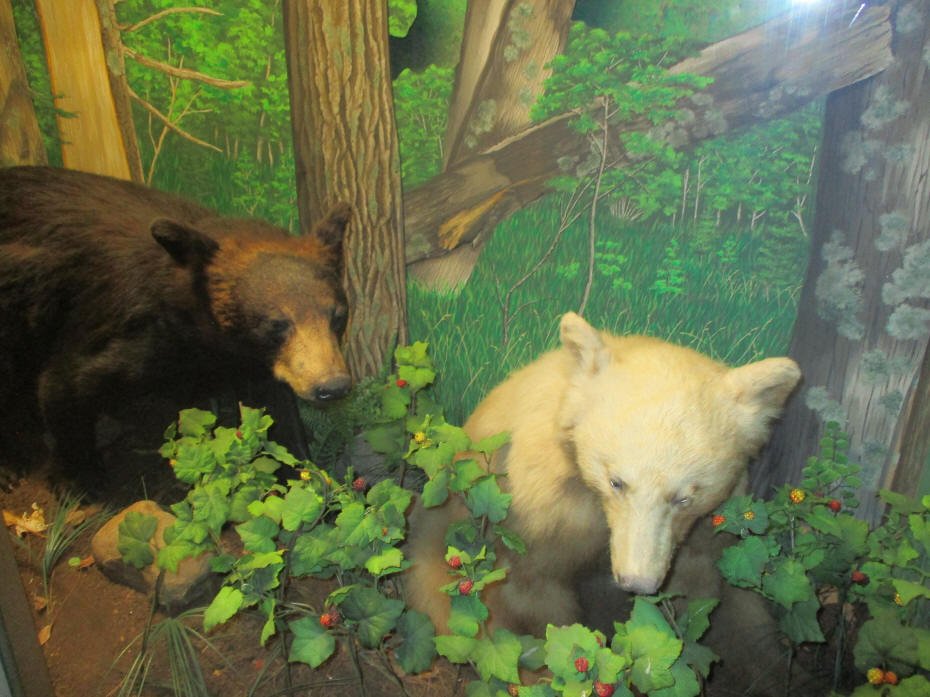 The black bear has the widest range of any North American
bear. It is found across the continent, primarily living in
forests, swamps, and wooded mountains. It is a powerful swimmer
and skilled tree climber.
The black bear has the widest range of any North American
bear. It is found across the continent, primarily living in
forests, swamps, and wooded mountains. It is a powerful swimmer
and skilled tree climber.
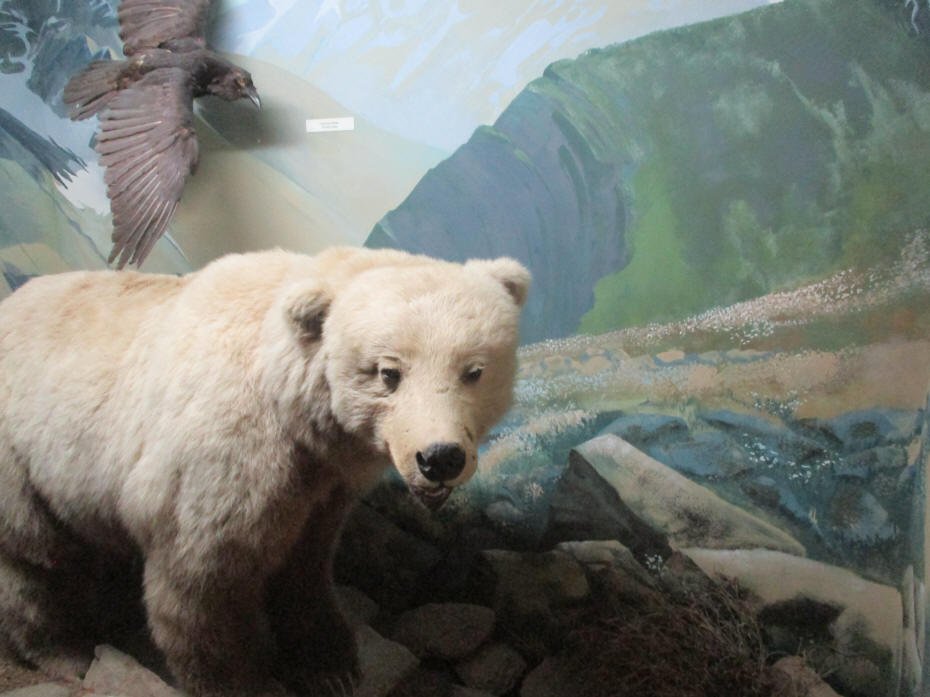 Although
commonly found in Alaska and western Canada, the grizzly bear
has a limited range in the Rocky Mountains of the United States.
Grizzlies prefer open country in the mountain areas and often
forage along streams and rivers. Although
commonly found in Alaska and western Canada, the grizzly bear
has a limited range in the Rocky Mountains of the United States.
Grizzlies prefer open country in the mountain areas and often
forage along streams and rivers.
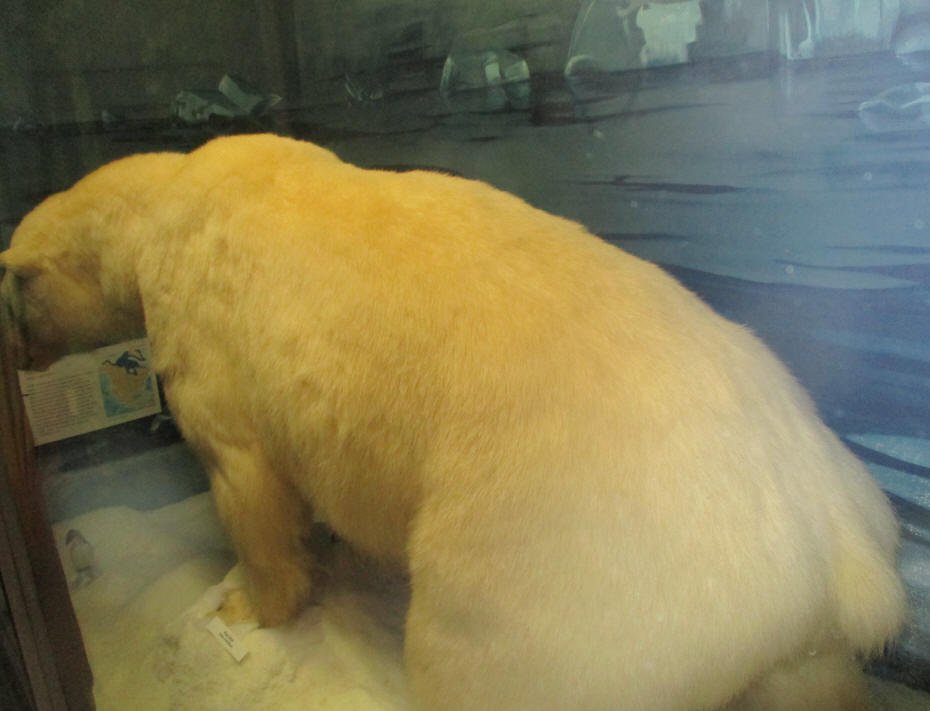 Well
camouflaged to blend in with the ice and snow, the polar bear
ranges across the far extreme north of Canada, Alaska, and the
islands of the Arctic Circle. Well
camouflaged to blend in with the ice and snow, the polar bear
ranges across the far extreme north of Canada, Alaska, and the
islands of the Arctic Circle.
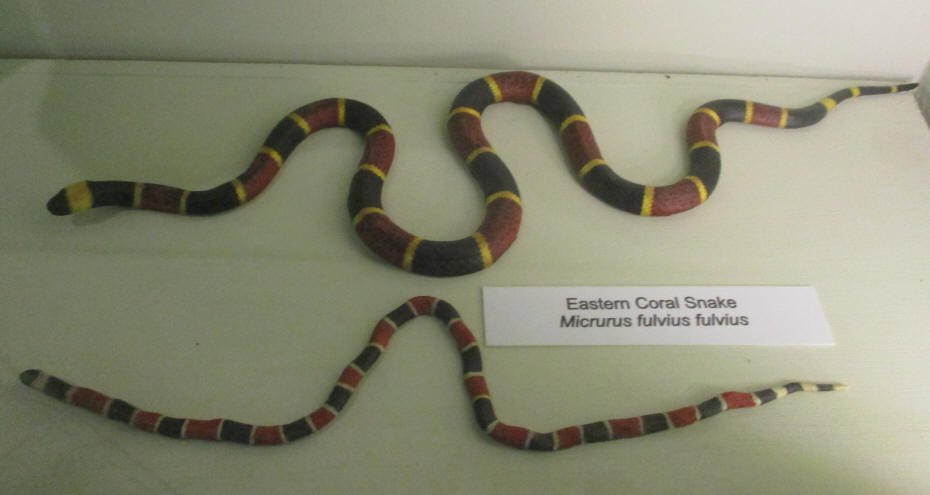 Eastern
coral snake. Red and yellow kill a fellow. Eastern
coral snake. Red and yellow kill a fellow.
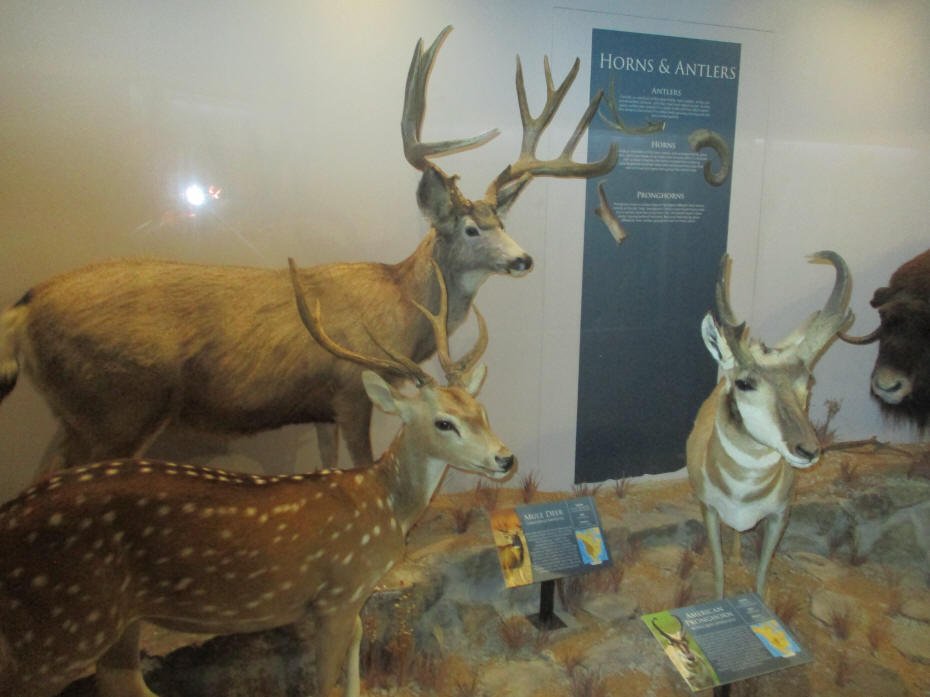 Horns
and antlers of North America. Horns
and antlers of North America.
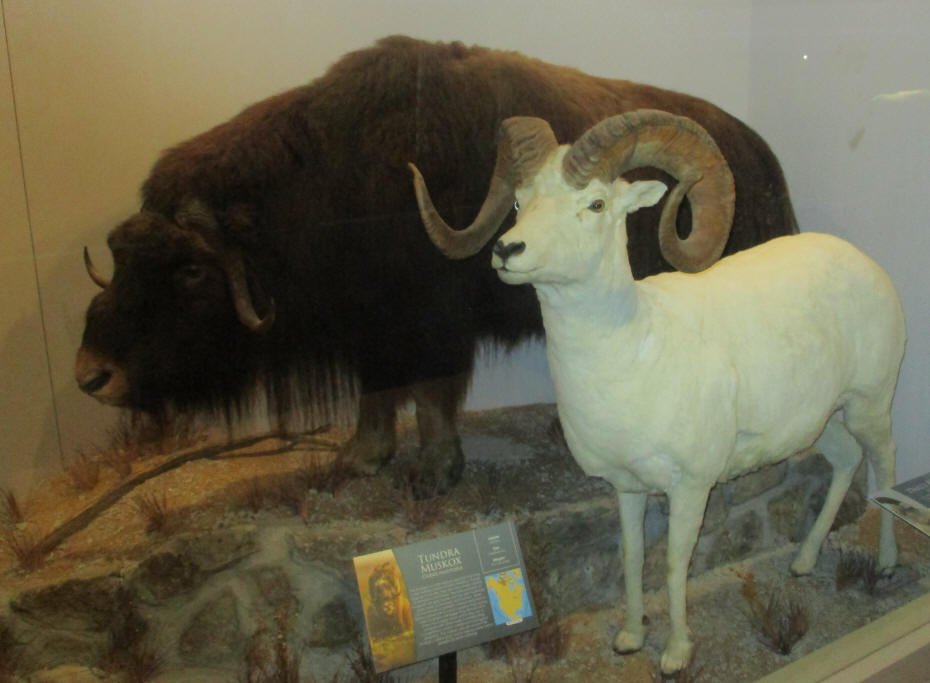 Tundra
Muskox and Dall Sheep, creatures of the subarctic. Tundra
Muskox and Dall Sheep, creatures of the subarctic.
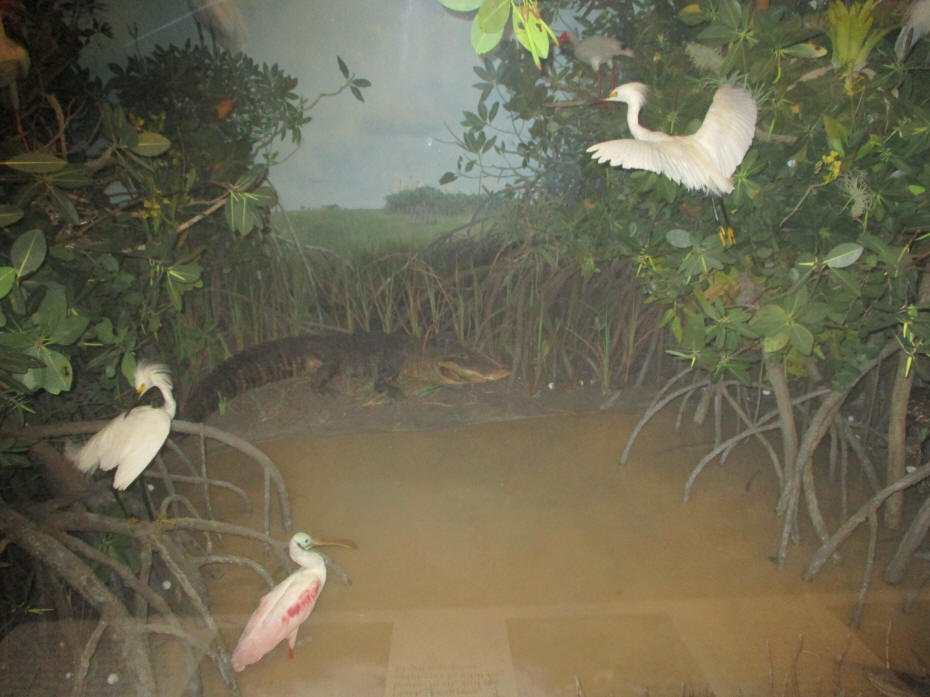 The
Southeastern United States, the Everglades. The
Southeastern United States, the Everglades.
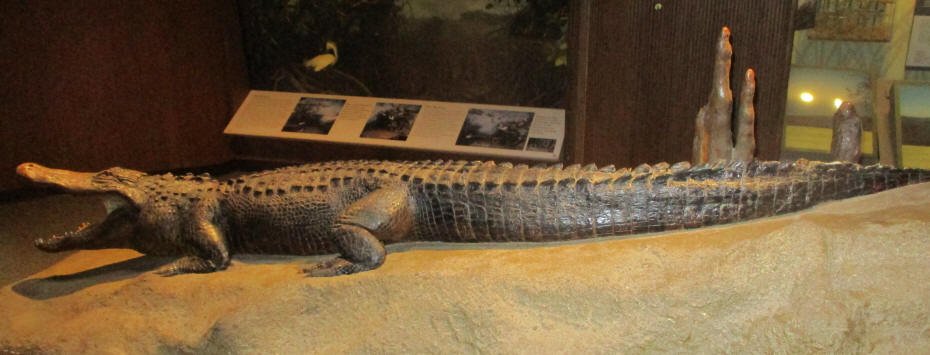 A
closer look at the Everglades. A
closer look at the Everglades.
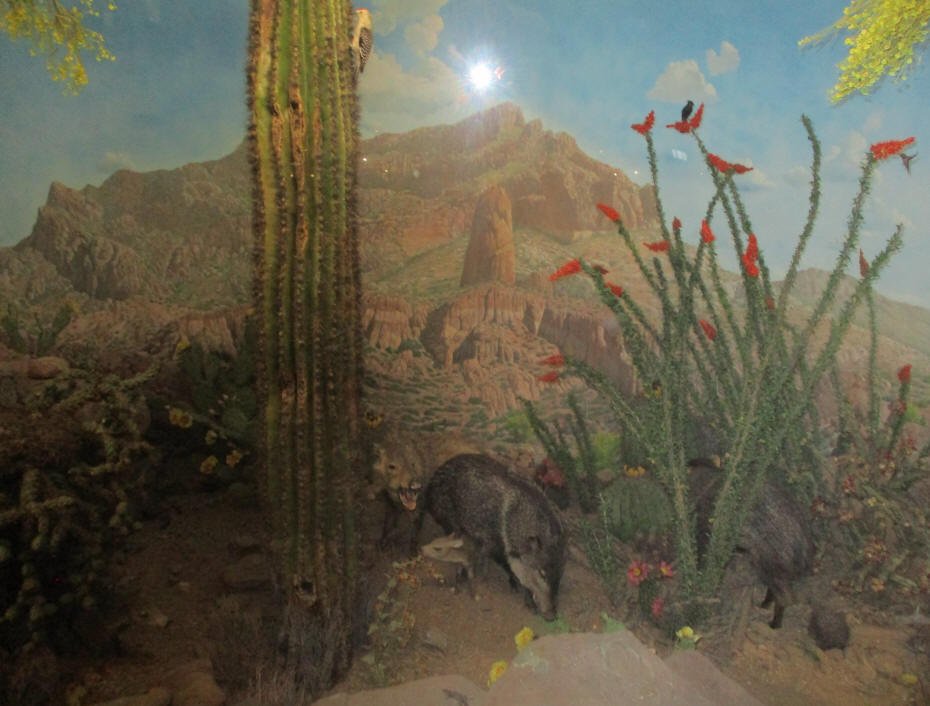 The Southwest, Sonoran Desert.
 Of
course, there were buffalo (bison) roaming. Of
course, there were buffalo (bison) roaming.
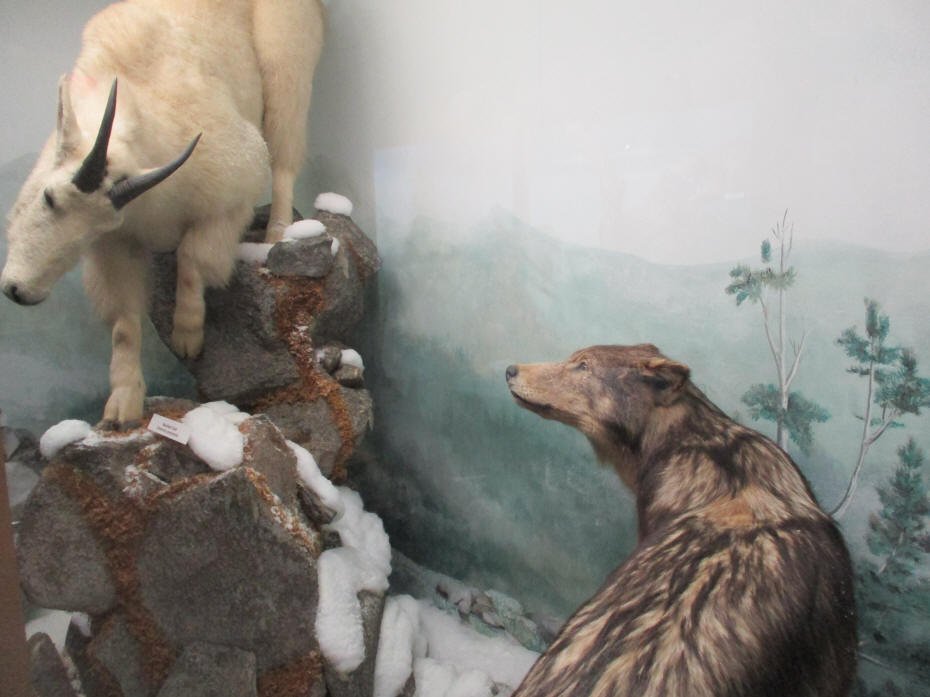 Mountain Goat and Timber Wolf.
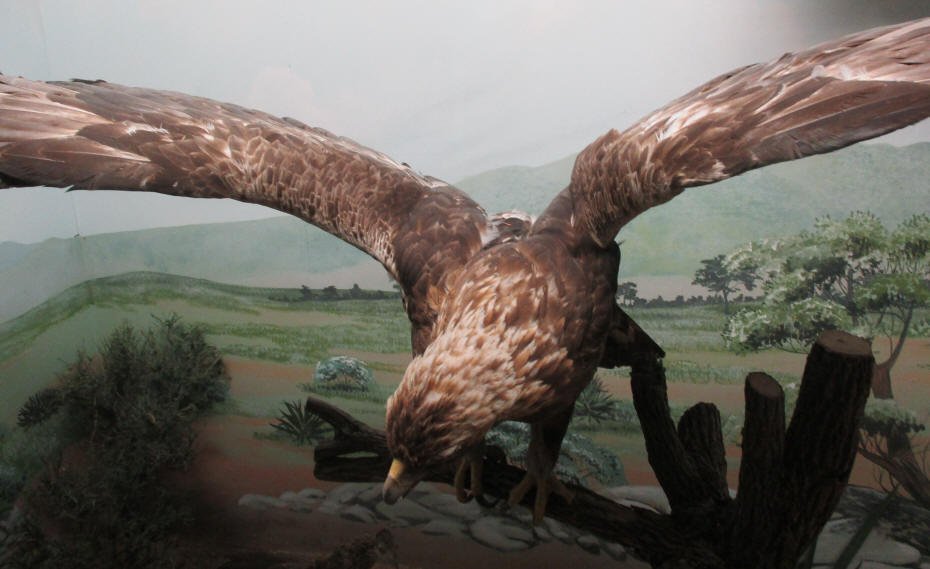 Plenty of birds were in the exhibit.
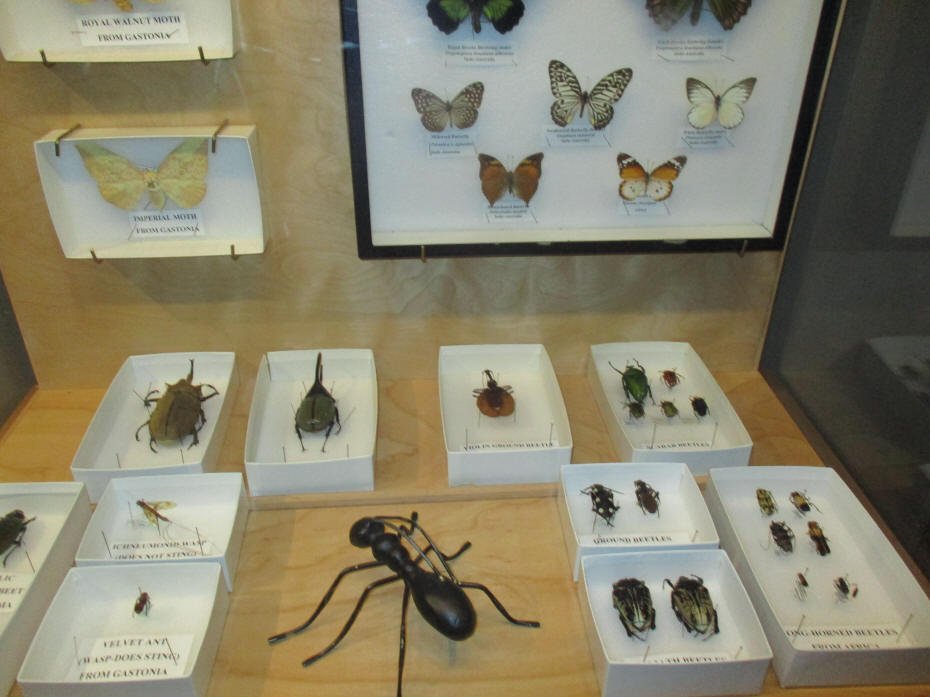 Even
insects were included. Even
insects were included.
Cats Untamed
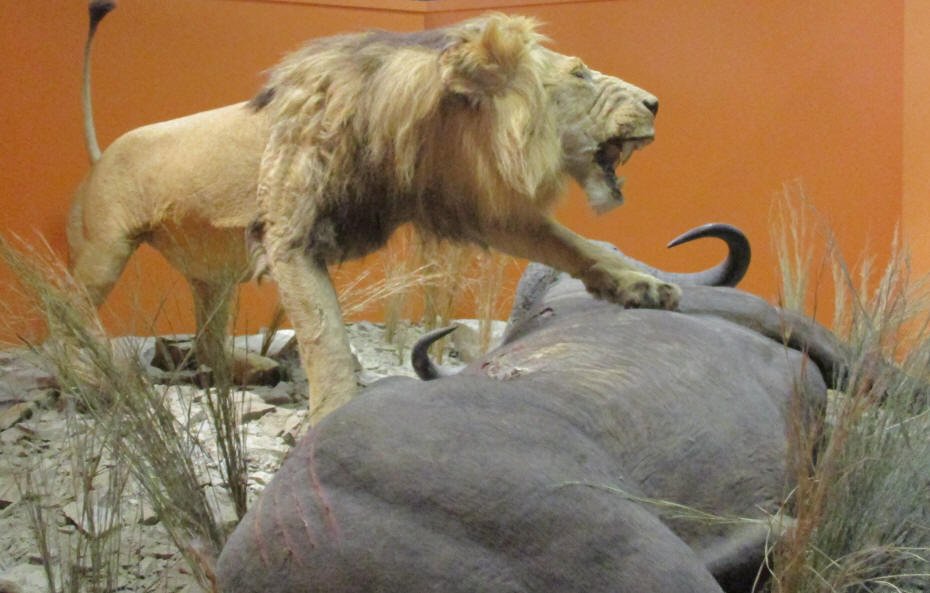 Lion.
Lion.
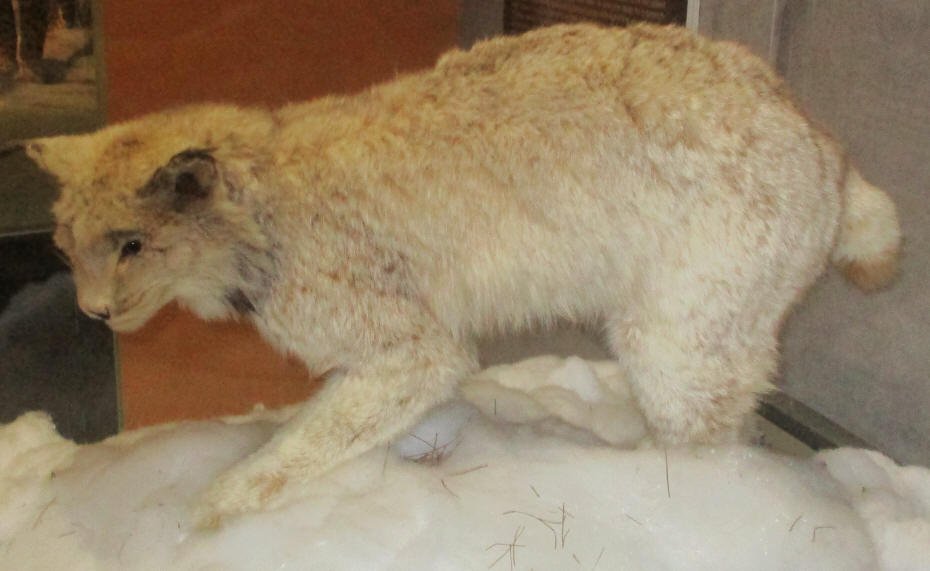 Canadian Lynx. Canadian Lynx.
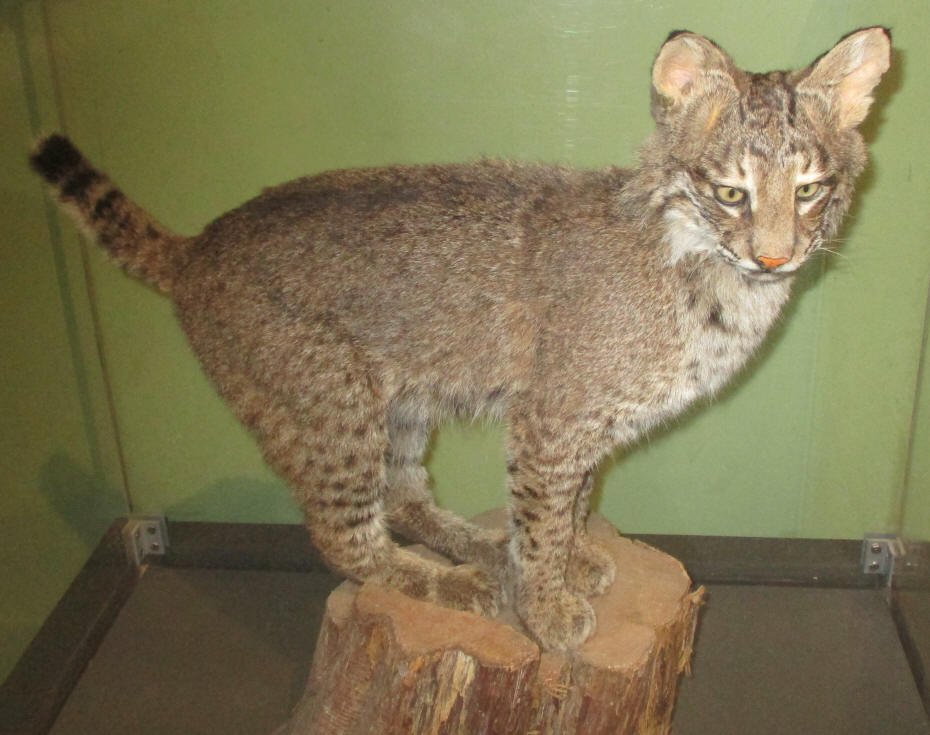 Bobcat. Bobcat.
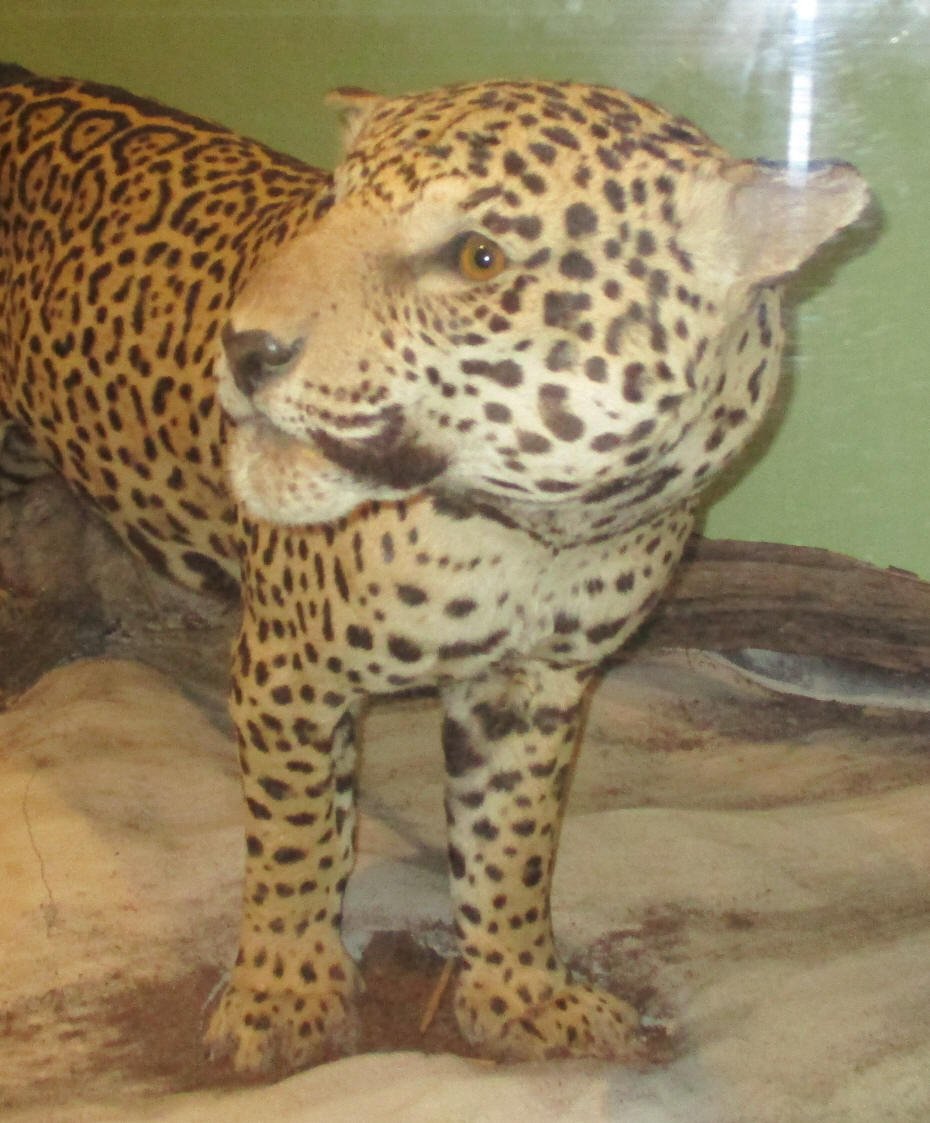 Jaguar. Jaguar.
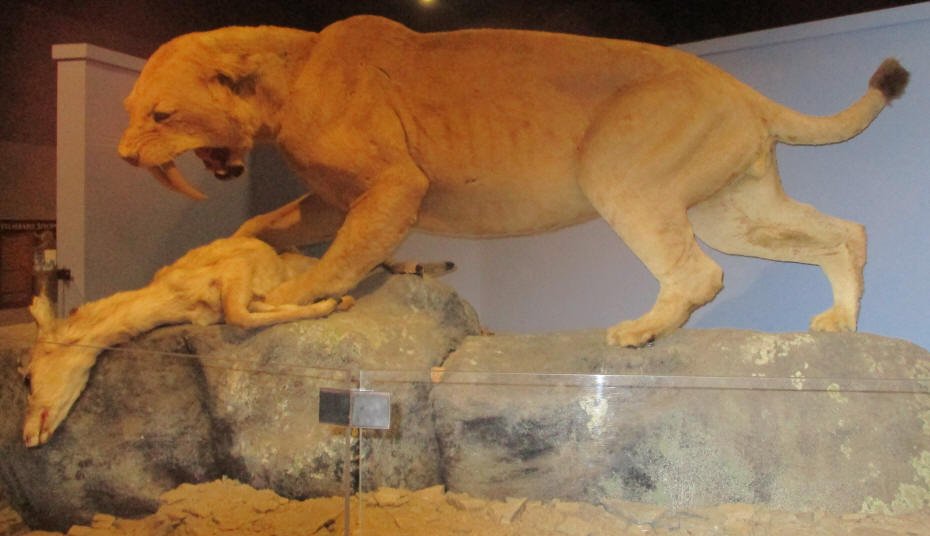 Smilodon.
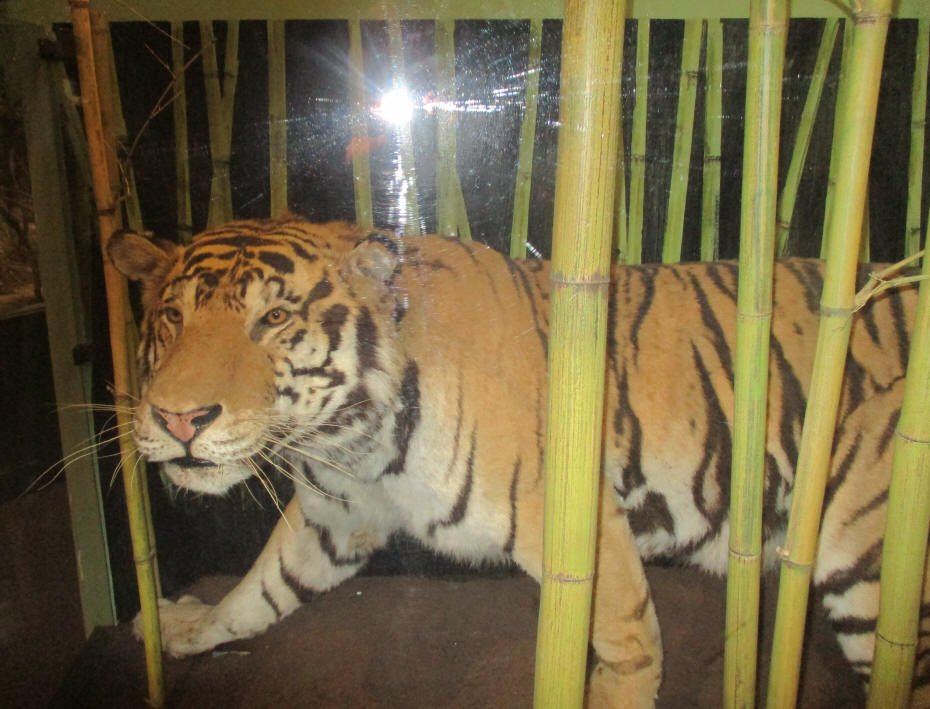 Bengal Tiger. Bengal Tiger.
On a smaller scale than the huge North American exhibit is the
North Carolina Hall of Natural History. It covers the regions of
North Carolina in terms of landscapes and wildlife. It includes
a cave diorama and many of the animal ambassadors. In a sense it
is more interesting than the North American exhibit in that it
is more local, and all the landscapes are nearby.
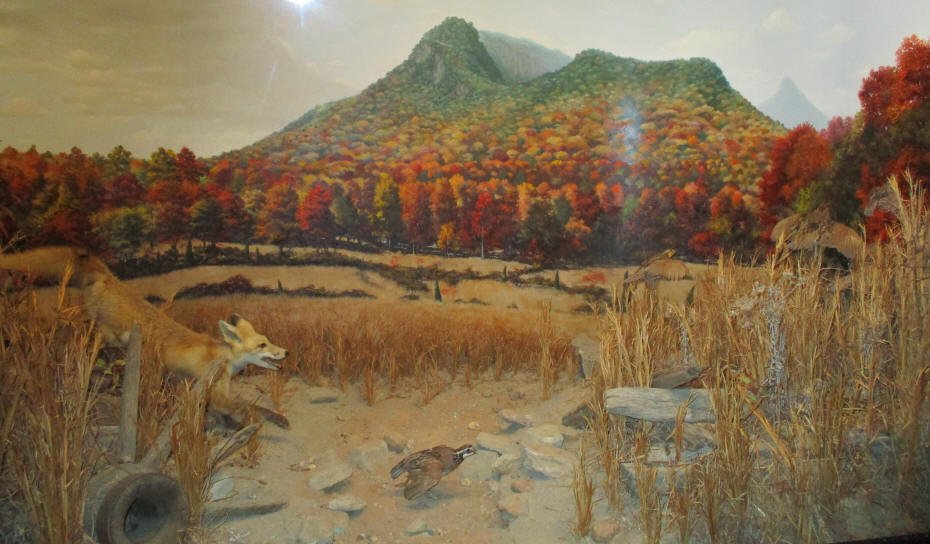 The North Carolina Piedmont.
 The North Carolina Coastal
Plain. The North Carolina Coastal
Plain.
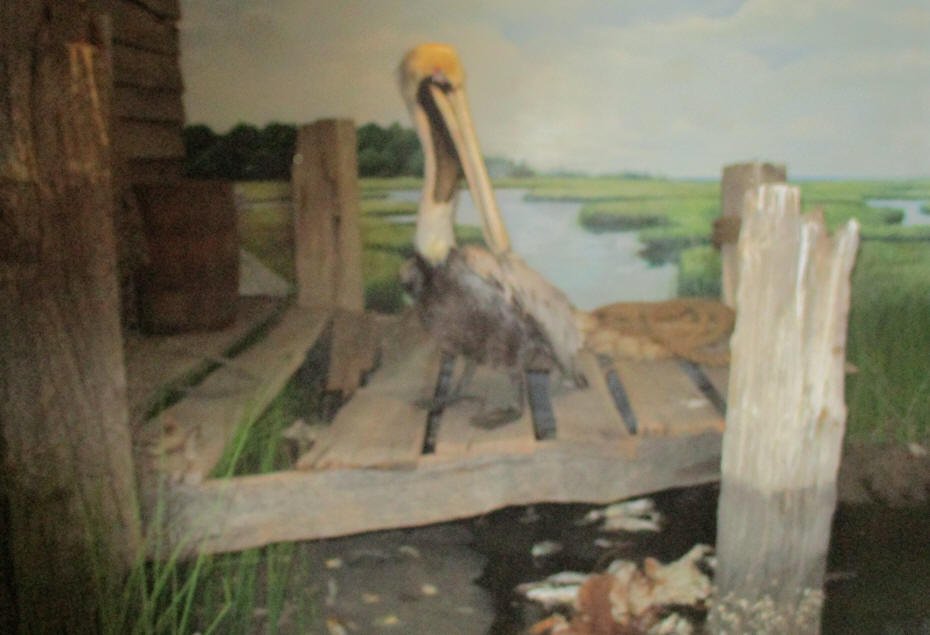 The North Carolina Coastline. The North Carolina Coastline.
The Nature Trail and the Farm
The nature trail, as you-'d expect, is about plants, animals, and
ecological communities; and there are plenty of interpretive
signs to draw attention to those aspects. But along the trail
are other interesting things, like a gazebo, grist mill, or
stones. There is even a maze! The Catawba Indian Village and the
Farm are along the trail. It is hard to say which is more
interesting, inside the museum or outside the museum.
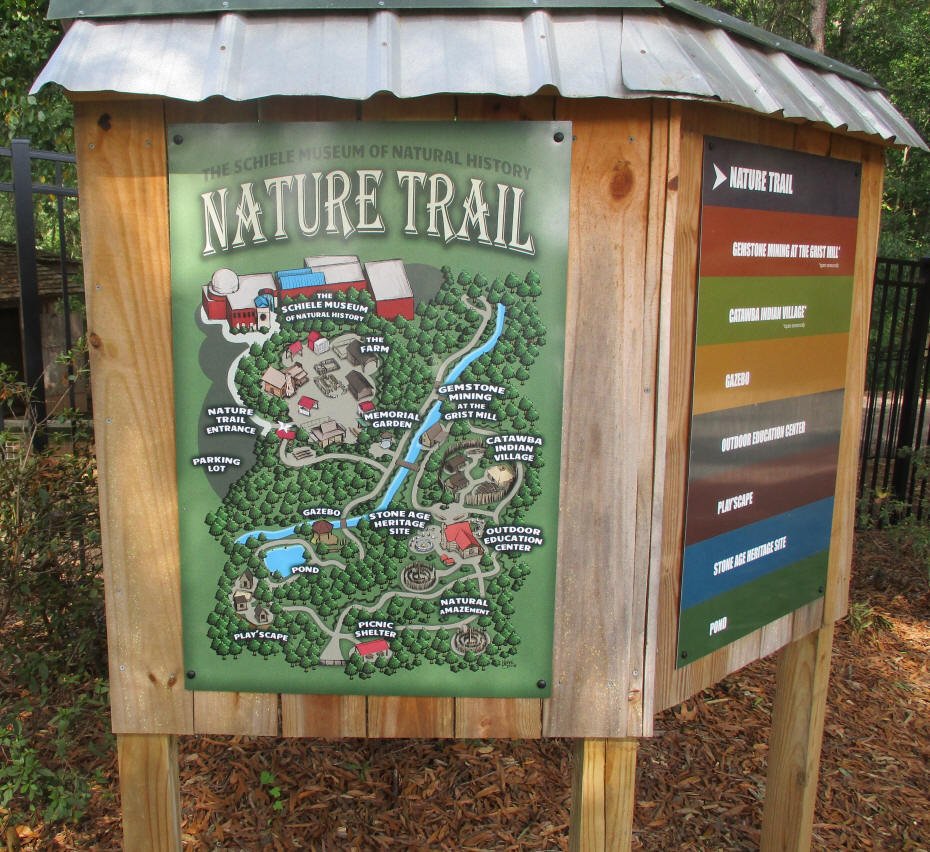 A map to outdoor adventure. A map to outdoor adventure.
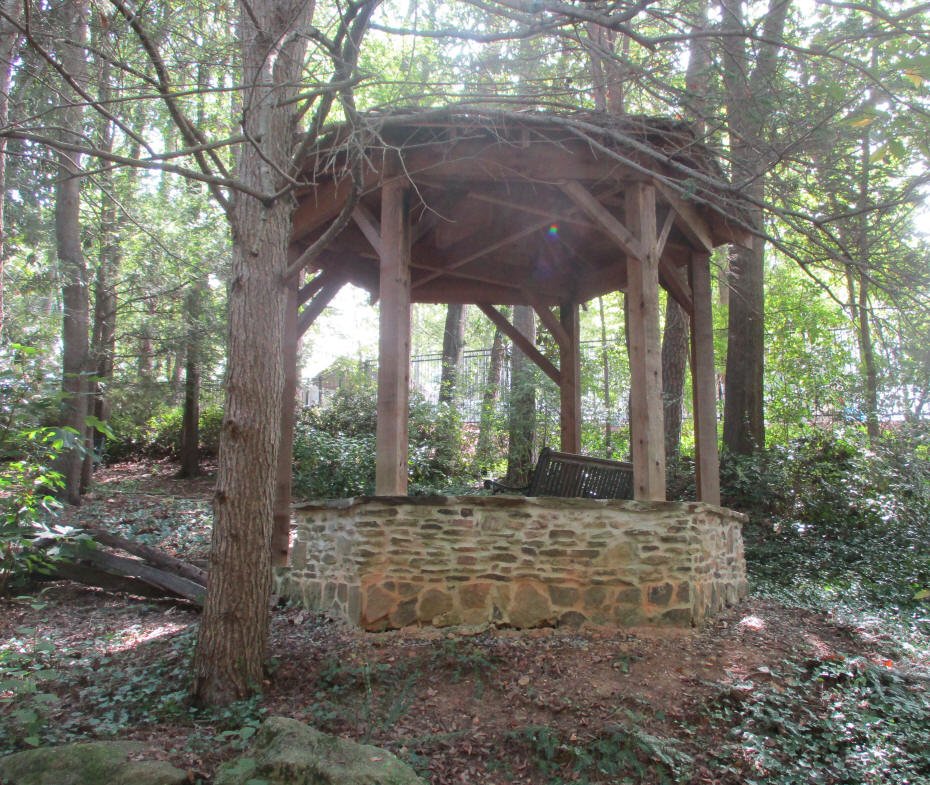 Along the trail is a gazebo. Along the trail is a gazebo.
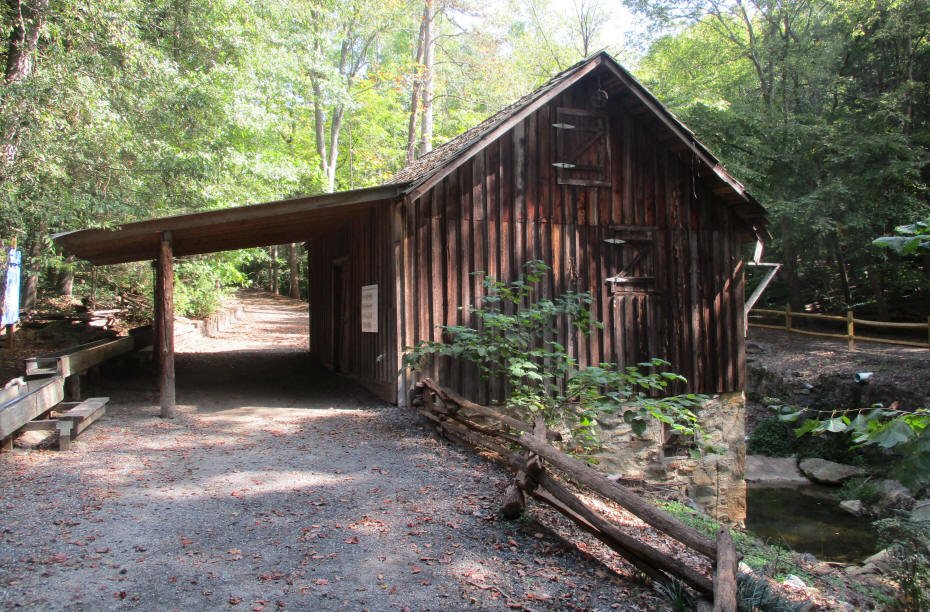 The Grist Mill. Water power,
widely available from rivers and streams, invited industry to
the Carolina Piedmont. This mill is reminiscent of the many
local gristmills common during the 1800s and early 1900s.
Running water turned the water wheel that then turned the mill
inside. Corn was ground into corn meal and grits; wheat was
ground into flour. Water also powered sawmills, iron furnaces
and forges, and the first textile mills. There is a
gemstone mining
educational program, mainly for the kids, where a running-water
sluice is used to mine for gemstones. This occurs near the grist
mill. The gemstones are identified and the finders get to keep
their treasures. The Grist Mill. Water power,
widely available from rivers and streams, invited industry to
the Carolina Piedmont. This mill is reminiscent of the many
local gristmills common during the 1800s and early 1900s.
Running water turned the water wheel that then turned the mill
inside. Corn was ground into corn meal and grits; wheat was
ground into flour. Water also powered sawmills, iron furnaces
and forges, and the first textile mills. There is a
gemstone mining
educational program, mainly for the kids, where a running-water
sluice is used to mine for gemstones. This occurs near the grist
mill. The gemstones are identified and the finders get to keep
their treasures.
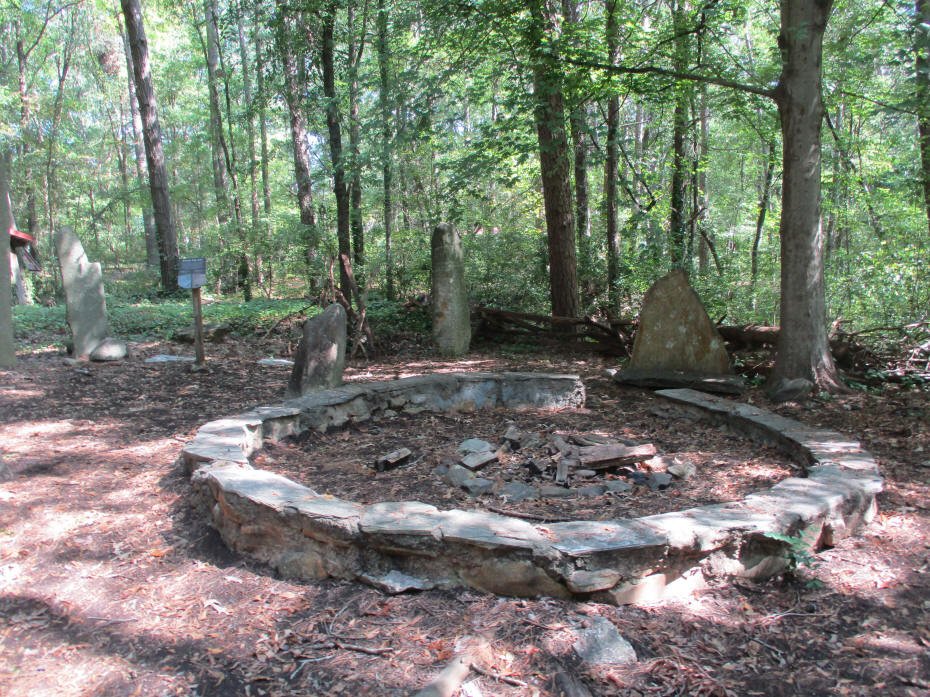 There is a Stone Age Heritage
Site along the trail. The stone age is that time in our history
when all people used stone tools as the basis of their
technology. It began more than 2.5 million years ago and came to
an end with he development of metal tools just a few thousand
years ago.
There is a Stone Age Heritage
Site along the trail. The stone age is that time in our history
when all people used stone tools as the basis of their
technology. It began more than 2.5 million years ago and came to
an end with he development of metal tools just a few thousand
years ago.
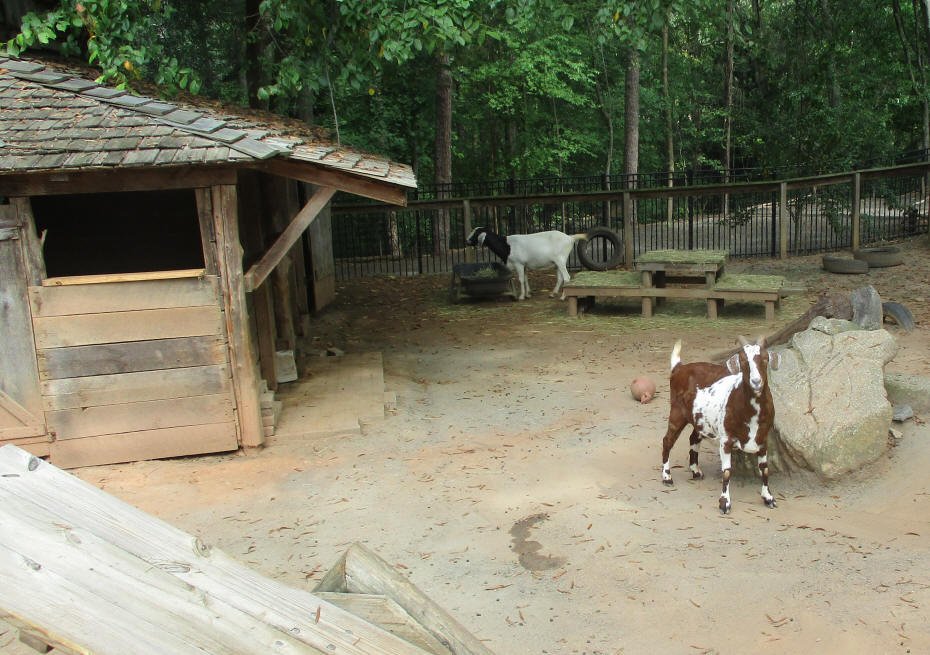
The Farm is just that, an outdoor farm exhibit by the nature
trail.
For thousands of years, humans have nurtured crops and
relied on animals for assistance, transportation, food,
clothing, companionship, and recreation. All of the plants and
animals found on our farms were once wild, and the story of
their domestication is part of the history of our civilization.
Farming has changed
dramatically over time in the Piedmont, and The Farm experience
explores the natural, ever-changing relationships between
people, plants, and animals on local farms across the history of
the region.
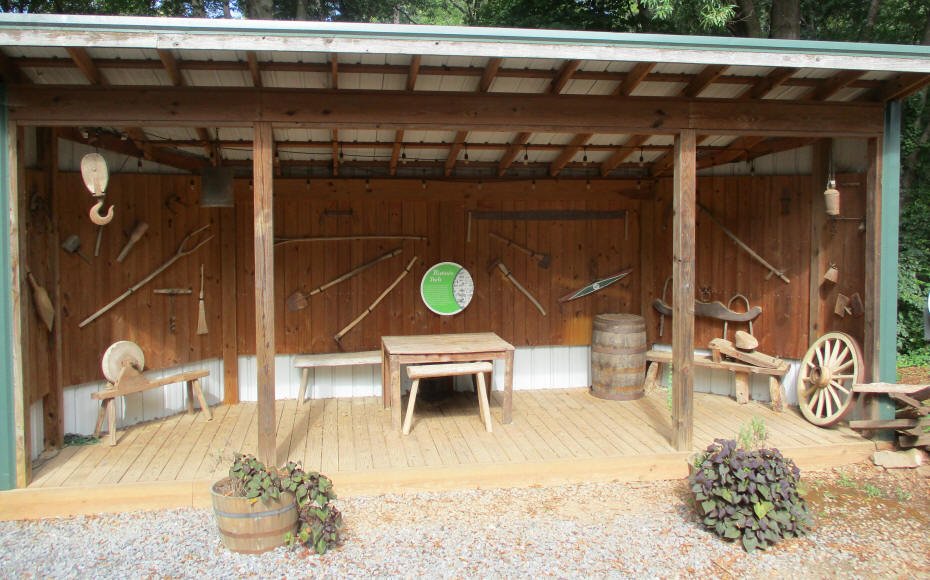
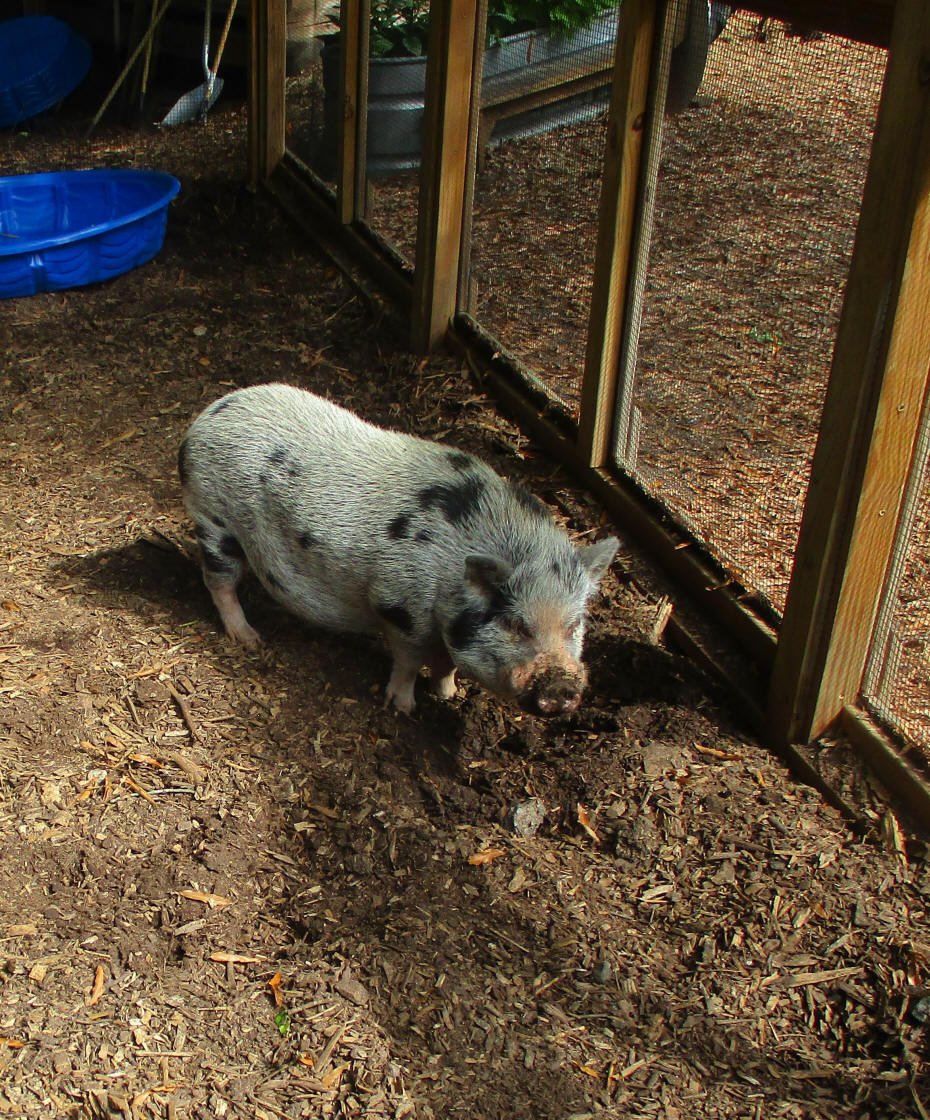
The main draw is live
animals. Visit with chickens, goats, pigs, sheep, bunnies, bees,
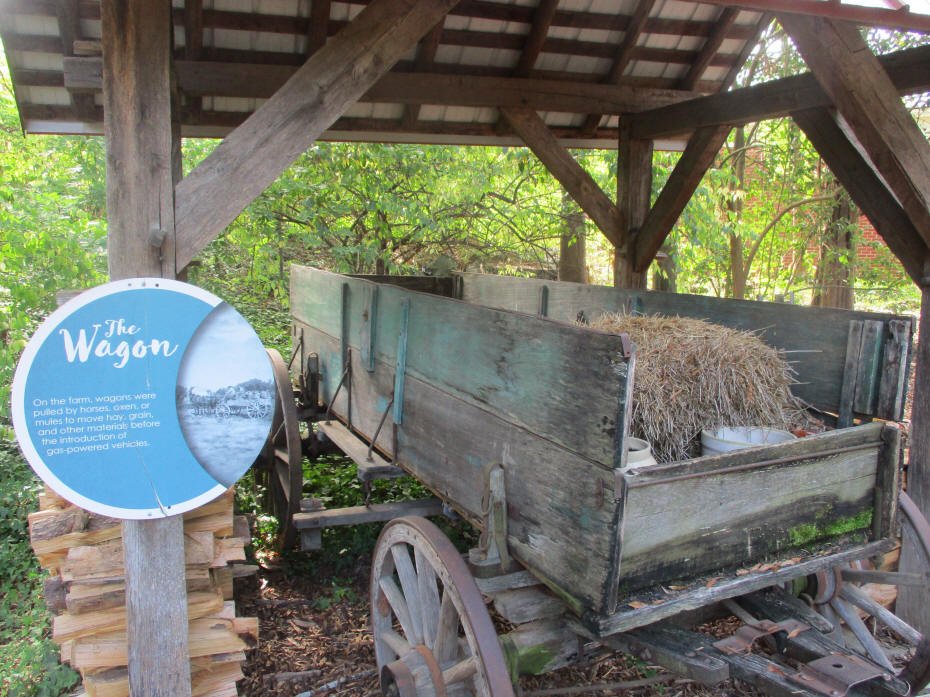
and miniature Hereford steers. Gardens showcase a variety of
plants that thrive in the Piedmont. Agricultural equipment, past
and present, demonstrates how technology on the farm has changed
over time.
A farm within a natural history museum sets the tone for this
adventure. It is an unusual combination of inside and outside
activities for a high-quality museum. This is a superb
opportunity right off the Interstate. The downside is that a
short Interstate stop for a rest won-'t do it; there-'s a whole
day-'s worth of adventure. One
way or the other, it-'s worth a stop.
Author/Photographer.
Tom Straka is a professor emeritus of forestry at Clemson
University in South Carolina. He has an interest in history,
forestry and natural resources, natural history, and the
American West.
Public Disclosure Please Read FTC
has a law requiring web sites to let their readers know if
any of the stories are 'sponsored' or compensated. We
also are to let readers know if any of our links are ads.
Most are not. They are just a way to direct you to
more information about the article where the link is placed.
We have several ads on our pages. They are clearly
marked as ads. I think readers are smart enough to know an
ad when they see one but to obey the letter of the law, I am
putting this statement here to make sure everyone
understands. American Roads and Global Highways may contain
affiliate links or ads. Further, as their bios show, most of
the feature writers are professional travel writers. As such
we are frequently invited on press trips, also called fam
trips. On these trips most of our lodging, dining,
admissions fees and often plane fare are covered by the city
or firm hosting the trip. It is an opportunity to visit
places we might not otherwise be able to visit. However, no
one tells us what to write about those places. All opinions
are 100% those of the author of that feature column.
|