Hidden CCC Gems in
Georgia State Parks
Story and Photographs
by
Tom Straka
The well-known Civilian Conservation Corps
(CCC)
and lesser-known Works Progress Administration (WPA)
are two
New Deal programs from the 1930s
Great Depression era. The programs produced all kinds of
structures, infrastructure, conservation works, and even public
art. I am drawn to historic and natural history sites and
visiting old CCC projects often satisfies both interests
simultaneously.
The CCC, working under National Park Service
planning and direction, developed many state parks across the
nation. These parks were designed in a rustic style similar to
the National Parks, often referred to as classic National Park
Service
parkitecture. These tend to be special parks, which
typically feature important natural or cultural history as part
of their appeal.
Georgia is a good example of a state with a
subset of state parks developed by the CCC. There are ten of
them: Hard
Labor Creek State Park in Morgan County,
A. H. Stephens
State Park in Taliaferro County,
F. D. Roosevelt
State Park in Harris County,
Indian Springs
State Park in Butts County,
Vogel State Park in
Union County,
Fort Mountain State Park in Murray County,
Little
Ocmulgee State Park in Wheeler County,
Magnolia
Springs State Park in Jenkins County,
Kolomoki
Mounds State Park in Early County, and
Cloudland
Canyon State Park in Dade County.
Some of the park names on the list of ten
CCC parks give away their historical background. F. D. Roosevelt
State Park encompasses President Franklin D. Roosevelt's Little
White House in Warm Springs. A. H. Stephens State Park includes
the former home of Alexander H. Stephens, who served as Vice
President of the Confederate States of America, a Georgian
governor, and a congressman. Kolomoki Mounds State Park includes
one of the largest and earliest Woodland period earthwork mound
complexes in the Southeastern United States and the largest in
Georgia. The Georgia Department of Natural Resources has
published a
history of each of its state parks.
Two of the CCC state parks will provide an
overview of the type of historical encounter you can expect from
these recreational areas. They are about an hour apart and both
are right off of Interstate 20. Both have standard cottages,
camping facilities, and even equestrian facilities. Since the
CCC developed them, small lakes are part of both parks. While
both offer standard state park feathers, I will focus my
discussion of them on the special CCC aspects which piqued my
interest.
Hard Labor Creek State Park
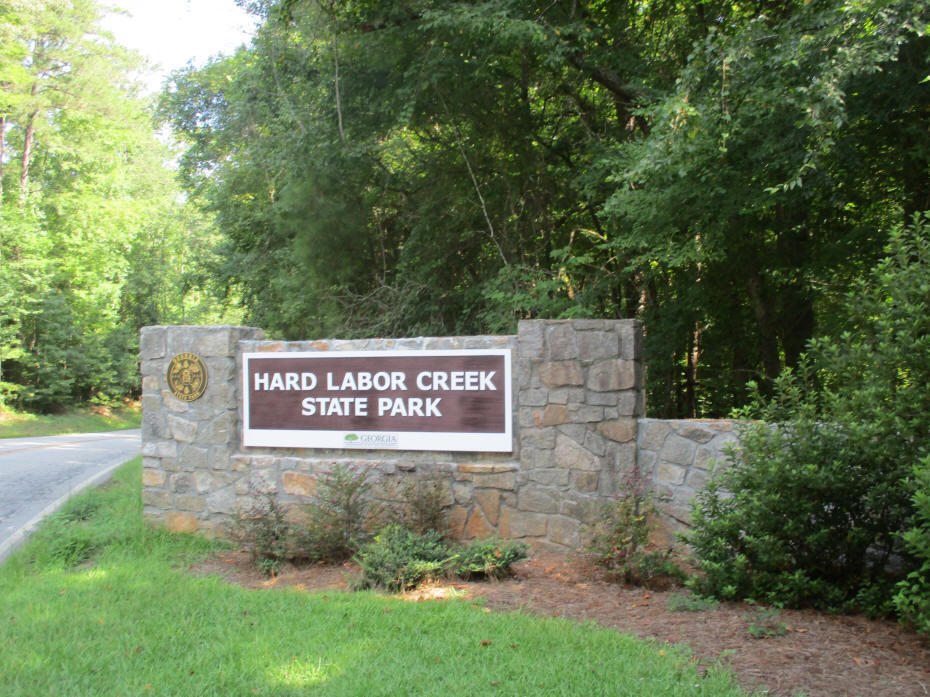
As you enter
Hard Labor Creek State Park, the first things you see are a
Trading Post (Visitor Center) and a
historical marker. The historical marker details the CCC
history of the park, while the Trading Post is a less-obvious
CCC feature. The title does call them hidden gems.
The trading
post was built by the CCC and later was enlarged and turned into
a visitor center and park office. The park is full of CCC
structures; many may not be that easy to identify as CCC
construction.
The rarest hidden gem is one of the few remnant
CCC camps in the United States and the only one in Georgia.
The CCC camp is where the CCC laborers lived while working on
the park. Most CCC camps were temporary and, when the CCC work
was complete, they were usually disassembled and moved
elsewhere. While the camp is not a formal part of the park
attractions, it is easily accessible. To me, it is the highlight
of the park.
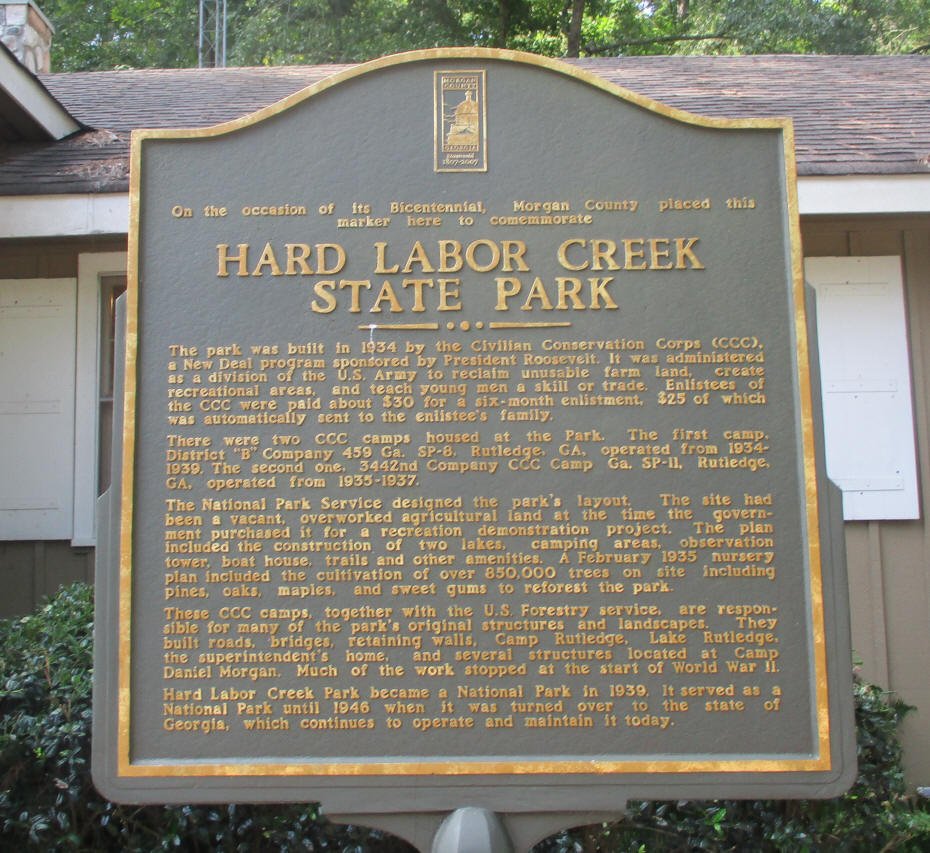
The
CCC aspect of the park is central enough to the park's history
to have its own historical marker.
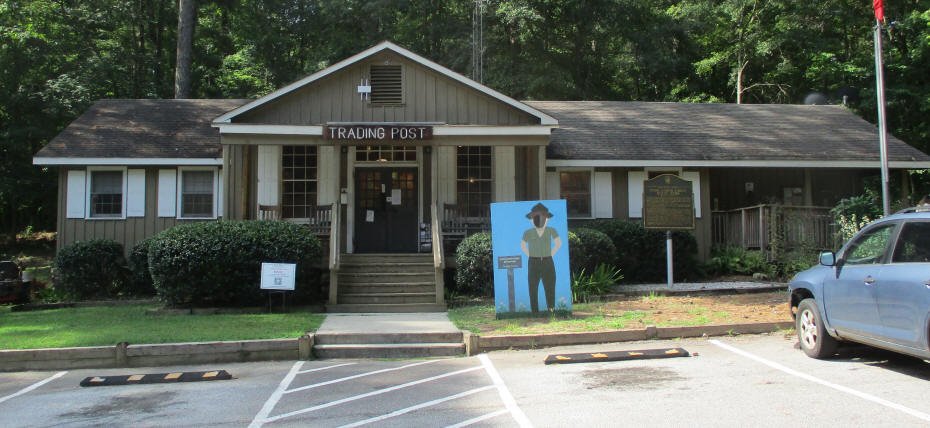
The
Trading Post, also visitor center and park office, is one of the
original CCC buildings. It has been enlarged, but still had the
CCC "flavor."
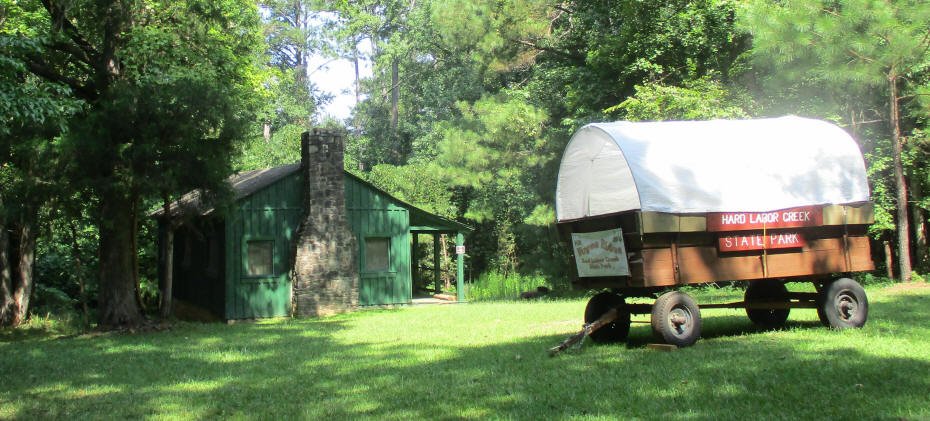
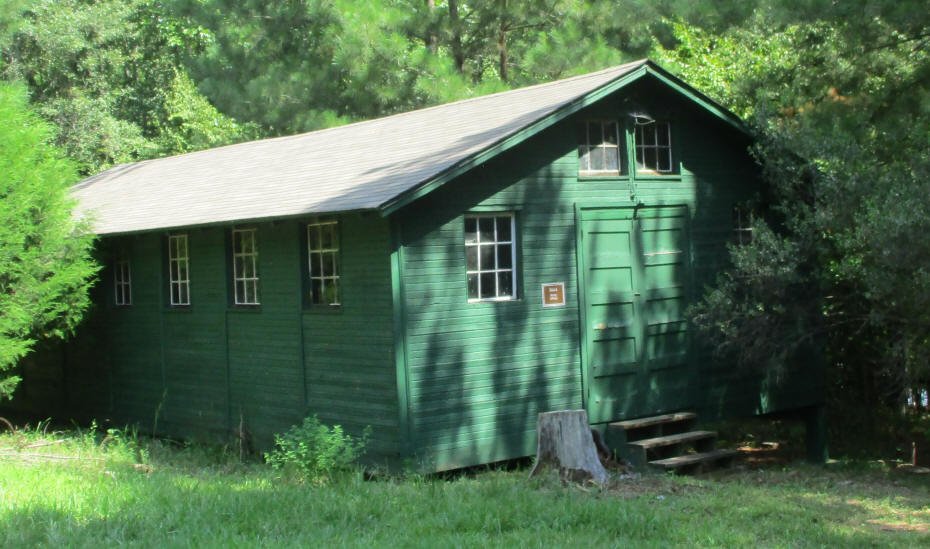
One
of four buildings in the old CCC camp, this was the office for
the National Park service staff that supervised the CCC work.
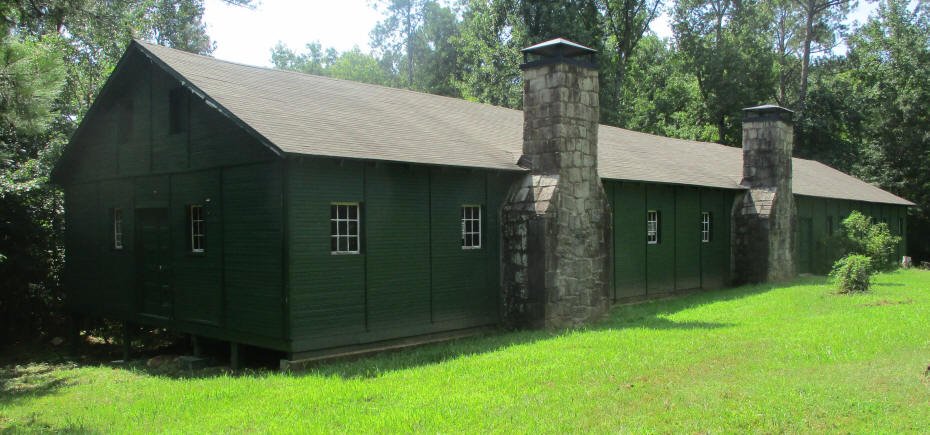
The
Recreation Hall, which was probably the center of activity at
the end of a workday.
Some
supervision was given by Army staff who had their own office.
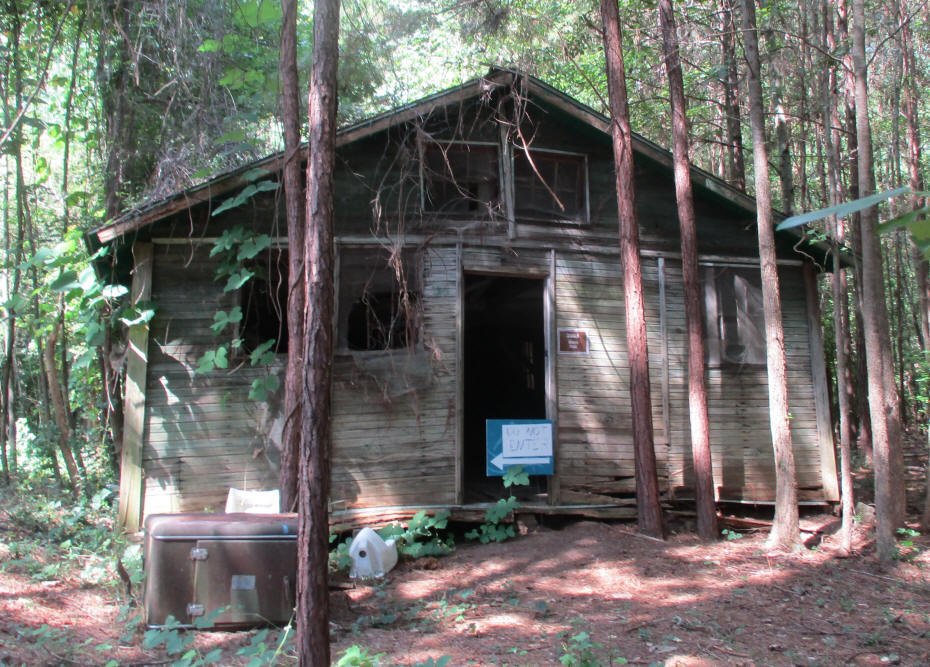
The
Mess Hall would have been an important building. CCC structures
are approaching 100 years of age. There are efforts to maintain
what is left of the camp; but not all of the buildings have
survived the ravages of time.
A. H. Stephens State Park
You will have no problem knowing you are
approaching the
state park as you head north from downtown Crawfordville; a
shiny while marble
monument and statue of Alexander H. Stephens quickly capture
the eye.
His fully-furnished white 1875 home, Liberty Hall, sits
behind the monument to add visual impact. To the side of the
monument, hard to notice unless you walk up to the monument, is
a small graveyard which contains the grave of Stephens. To the
side of Liberty Hall, also hard to notice, is a Confederate
Museum. A lot of super interesting stuff is hidden in plain
sight.
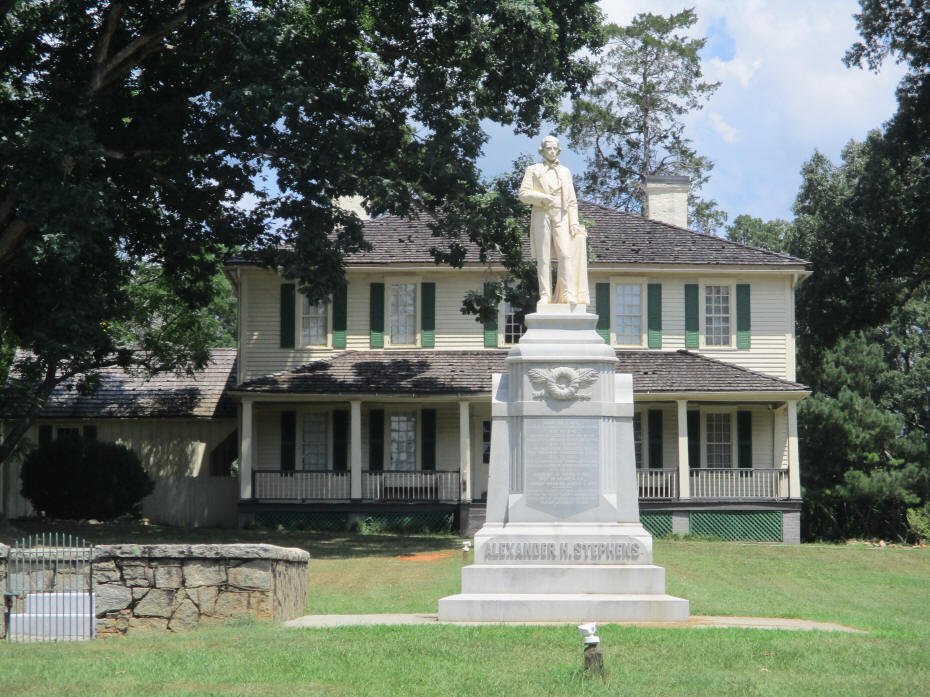
Monument to Alexander Hamilton Stephens, only vice president of
Confederate States of America, 50th Governor of
Georgia, and United States Congressman, both before and after
the Civil War.
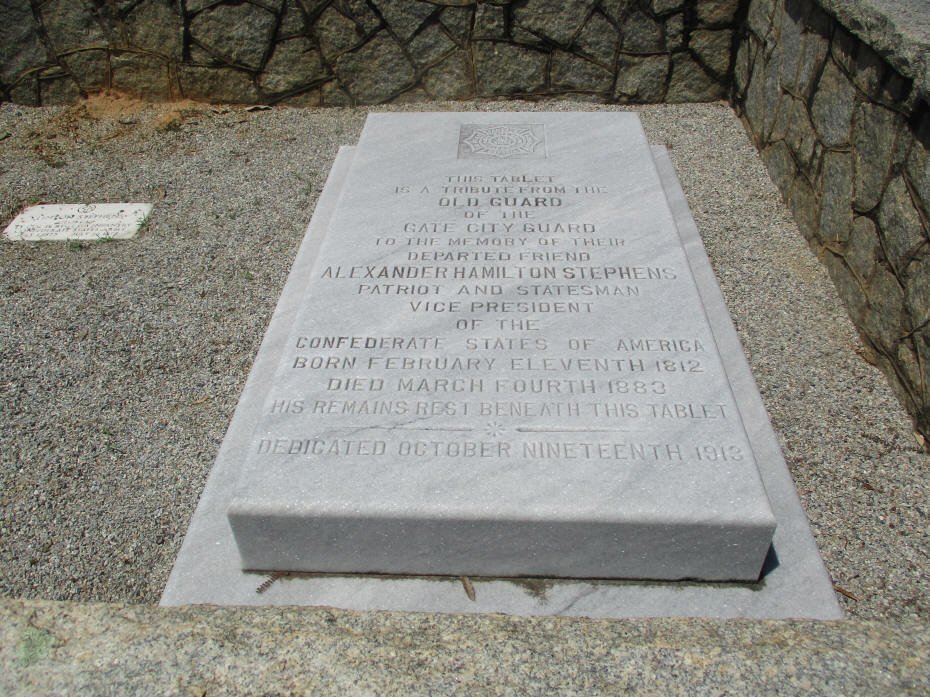
Grave
of Alexander Hamillton Stephens, adjacent to the monument.
The monument, house, and museum are
unabashedly Confederate, which creates a great charm. That
should not be surprising given the
origins of the park. The park started with a 12-acre
donation in 1932, which included Liberty Hall, to the State of
Georgia by the Stephens Monumental Association to establish a
memorial park. About a year later, eight acres were added from a
donation by the Daughters of the Confederacy. During the New
Deal the federal government purchased and developed the land
adjacent to the memorial park to develop the larger state park,
with the former memorial park serving as the historical focus of
the new park.
You will probably start with the
Confederate Museum (that was original name, technically it is
the Alexander Hamilton Stephens Museum), as it is nearer to the
parking area. While there are plenty of A. H. Stephens items in
the museum, the slant is towards Confederate. The
American Battlefield Trust says it "houses one of Georgia's
finest collections of Civil War artifacts." It is a small
museum, but I will agree it is one of the best Civil War museums
I've seen. A real gem. A few of the highlights of the museum are
below:
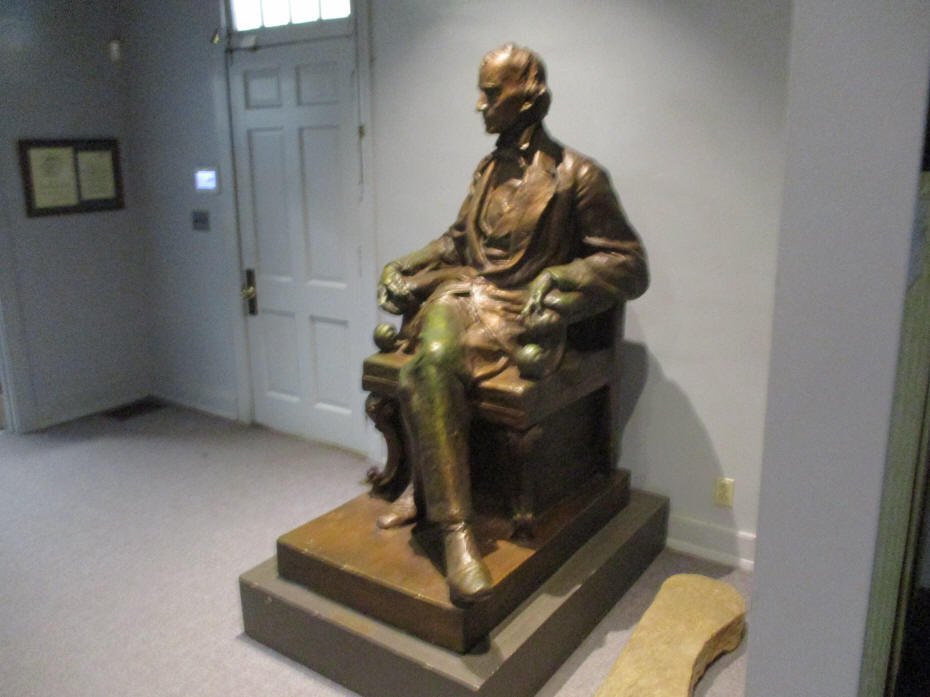
As
you'd expect, a monument of A. H. Stephens is one of the first
things you see entering the museum.
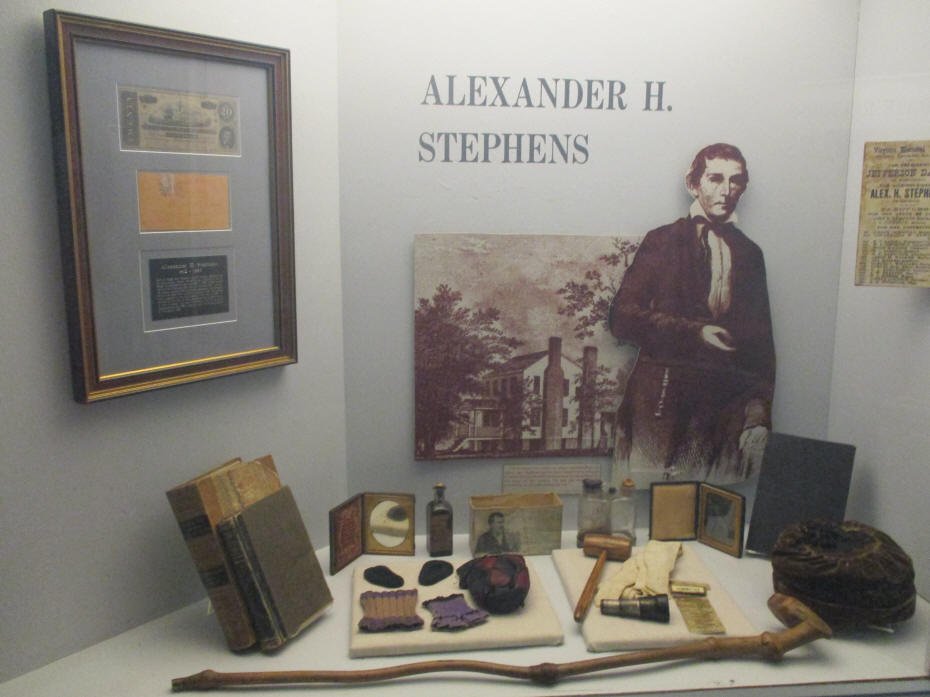
There
are many A. H. Stephens items in the museum, including his
wheelchair.
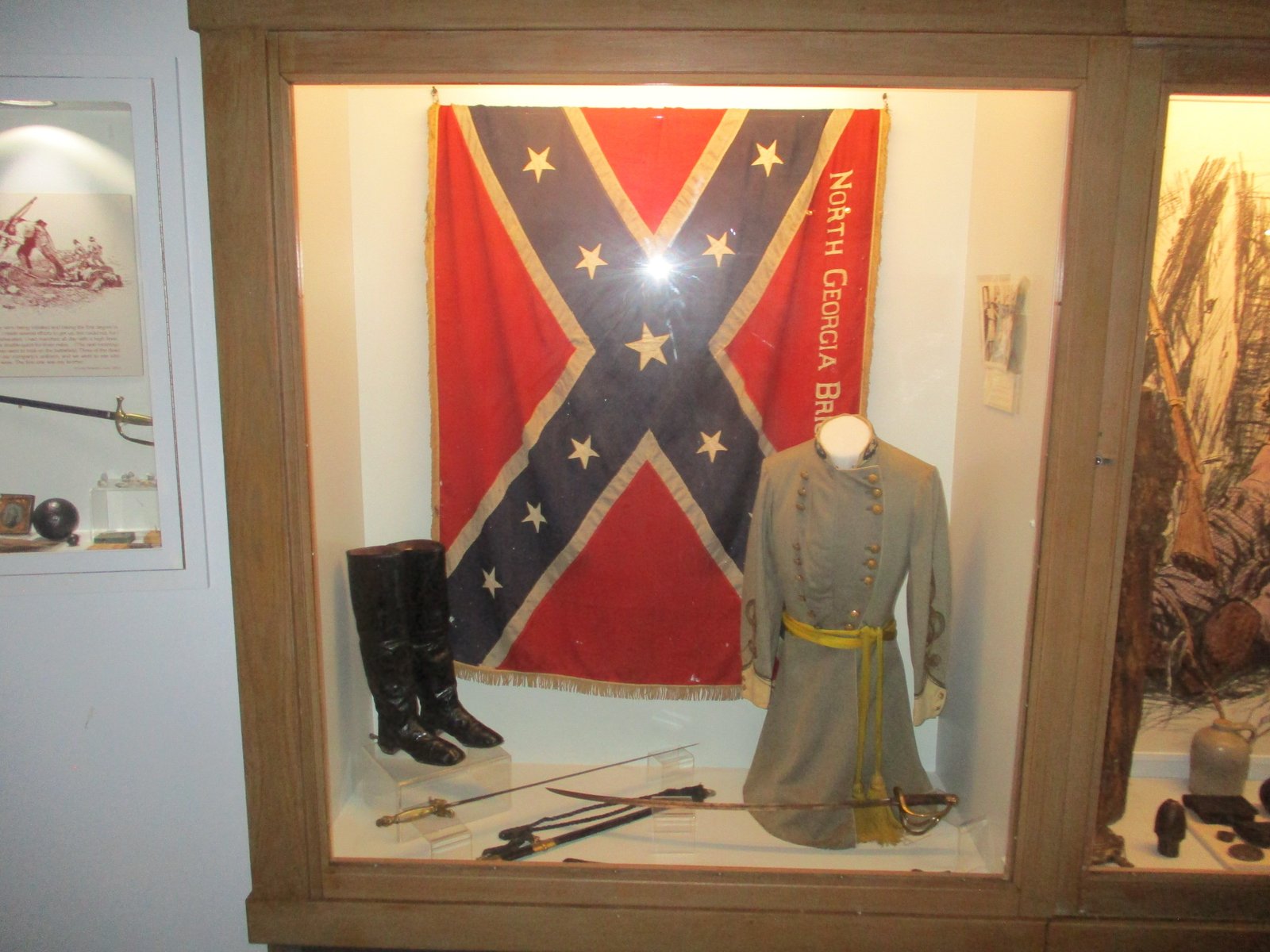
Earlier I wrote "unabashedly Confederate." The museum shines at
that. What I particularly liked was no woke narrative to
diminish it.
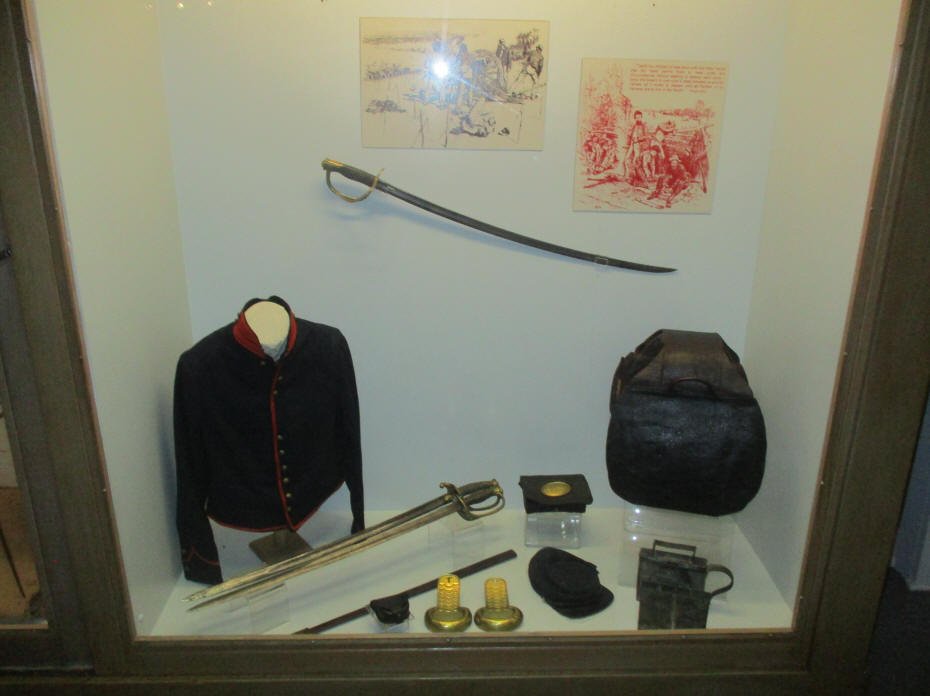
There
is no shortage of Civil War artifacts.
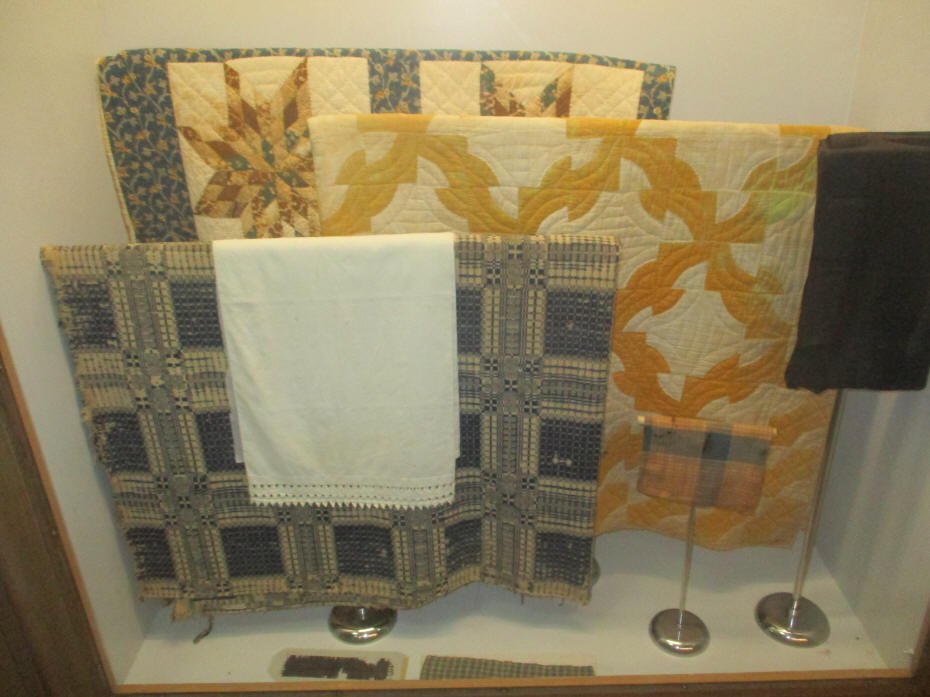
The
museum has variety and not all of it is Civil War. Handcraft
handwork is an example of that.
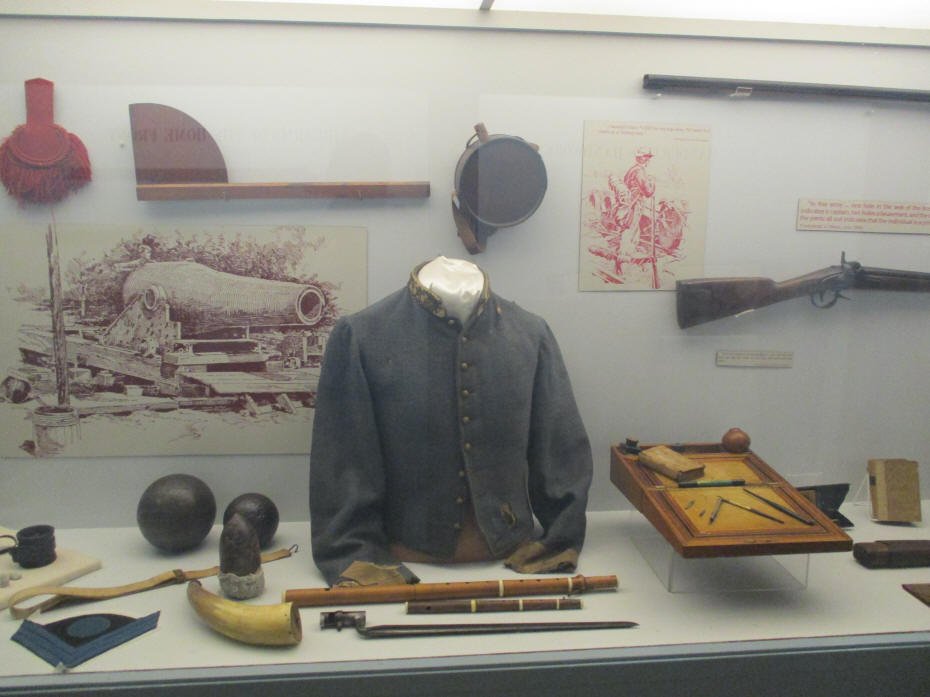
There
is plenty of variety within the Civil War items.
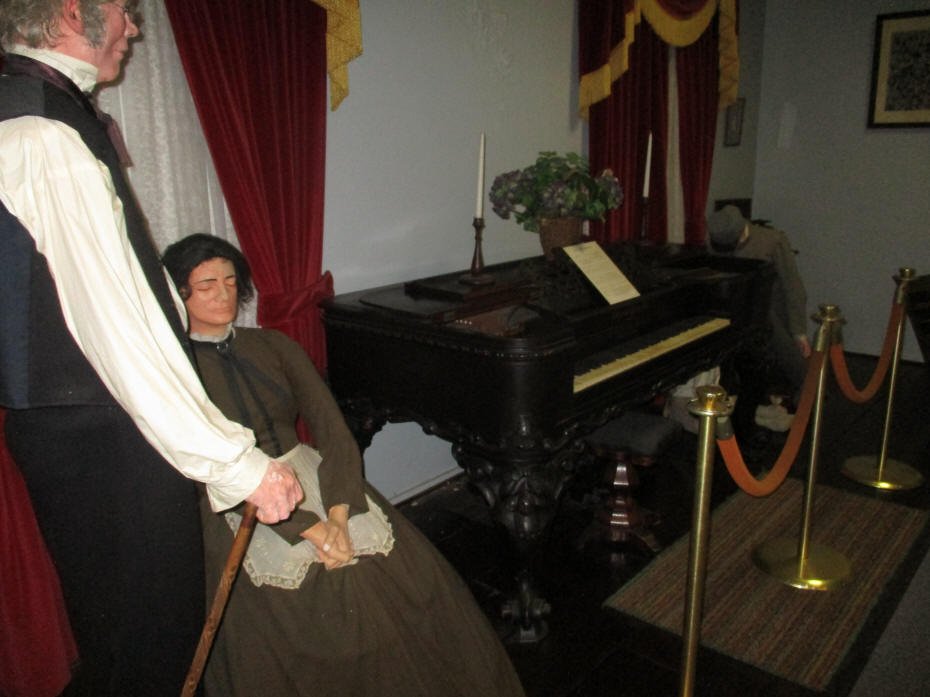
Not
all the displays are in display cases.
Liberty Hall was the home of Alexander H. Stephens and is
the
centerpiece of the park. Stephens was born about two miles
north of Liberty Hall on a farm in 1812 and Liberty Hall was his
home from 1834 until his death in 1883.
He purchased the house
in 1845. Stephens had most of the house torn down in 1875,
except the rear ell, and rebuilt to its original appearance.
Liberty Hall is a two-story white frame structure, and no major
alterations have occurred since 1875. The CCC did major
reconstruction work on the property when they worked on the
park. The house and outbuildings are worthy of a day trip in
their own right, but only the first floor of the house will be
described to give a flavor to this gem within a gem.
The
entrance door opens into a long and wide central hallway which
cuts through the main block of the house. There are two rooms on
either side of the hallway. The front one on the east was the
master bedroom. The room behind it was Stephens' private sitting
room. The front chamber on the west was a parlor. Back of it, in
the rear northwest corner, is the dining room. The guide for the
house tour is a local park ranger who has a "southern way" of
telling the story of the house; she tells an exceptionally
interesting story with all kinds of details.
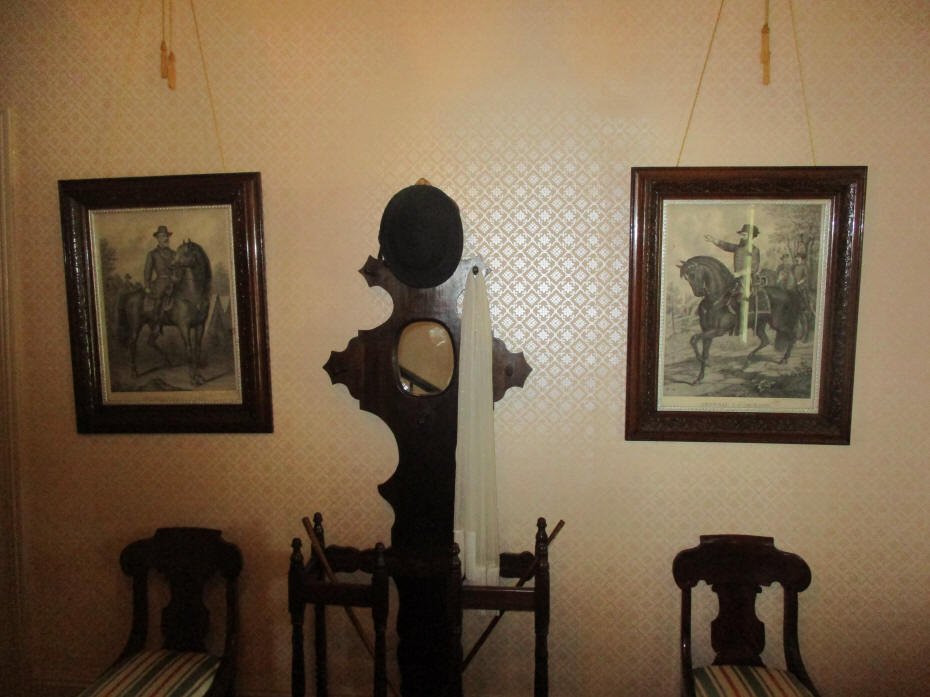
Setting the tone nicely, as you enter Liberty Hall, to your
right, will be two pictures, one of Robert E. Lee and one of
Stonewall Jackson.
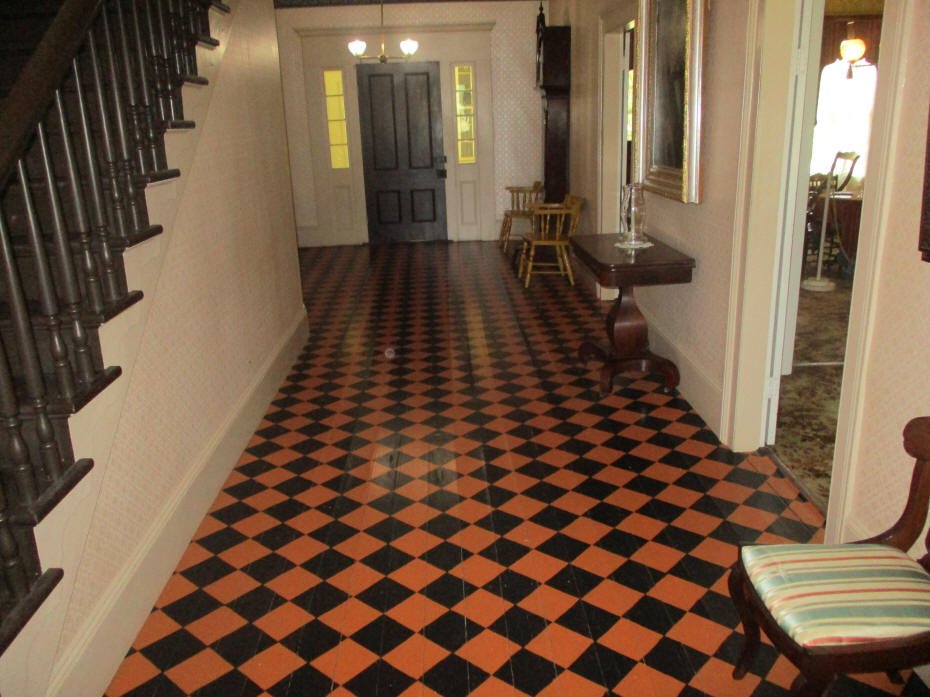
The floor in the main hallway is an
interesting painted diamond pattern.
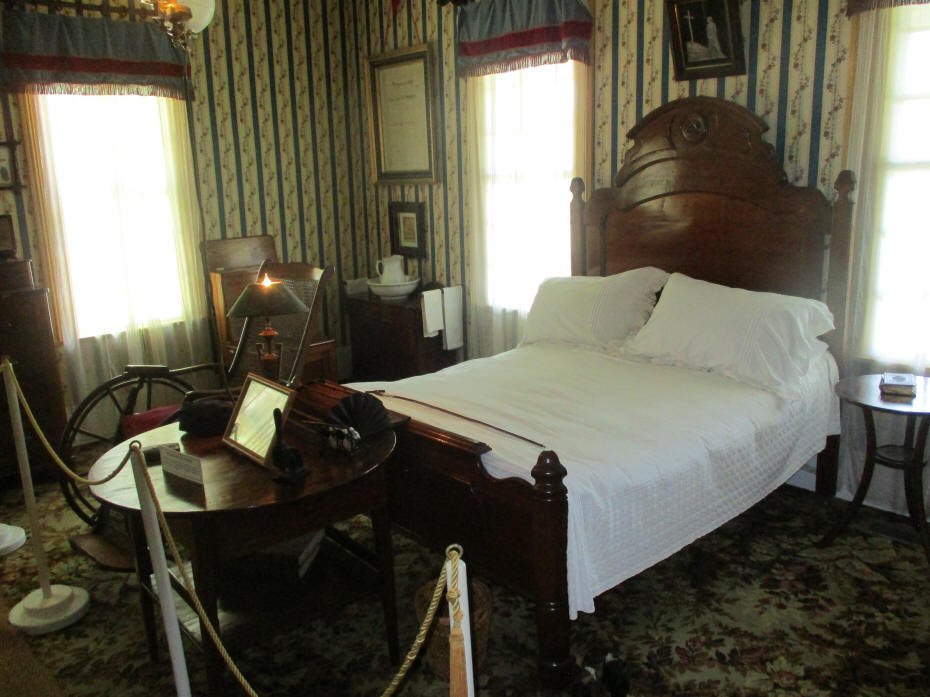
The
master bedroom as it was in 1883 upon Stephens' death.
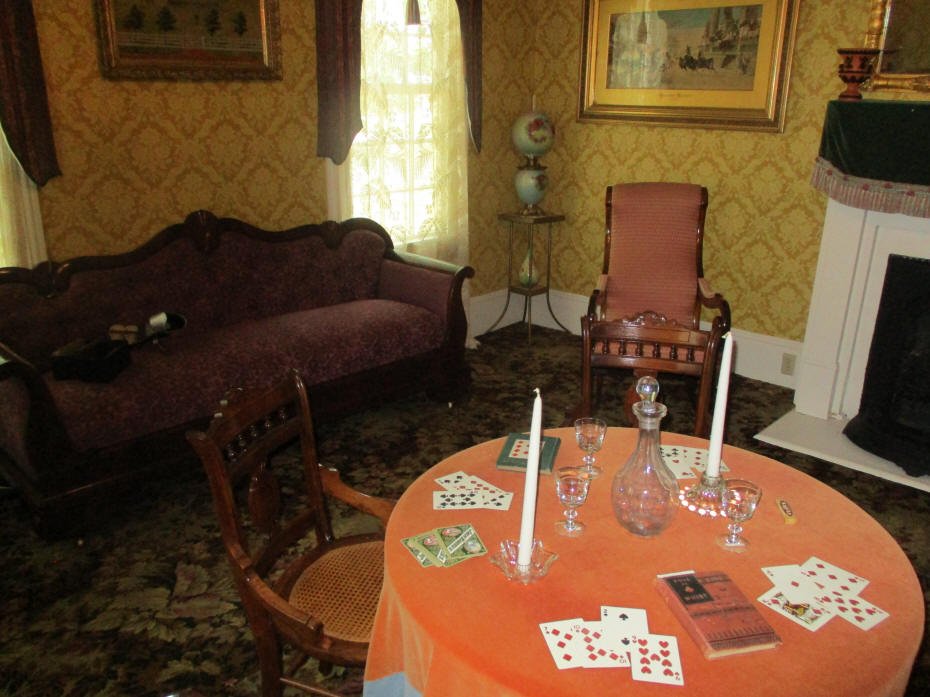
The
sitting room.
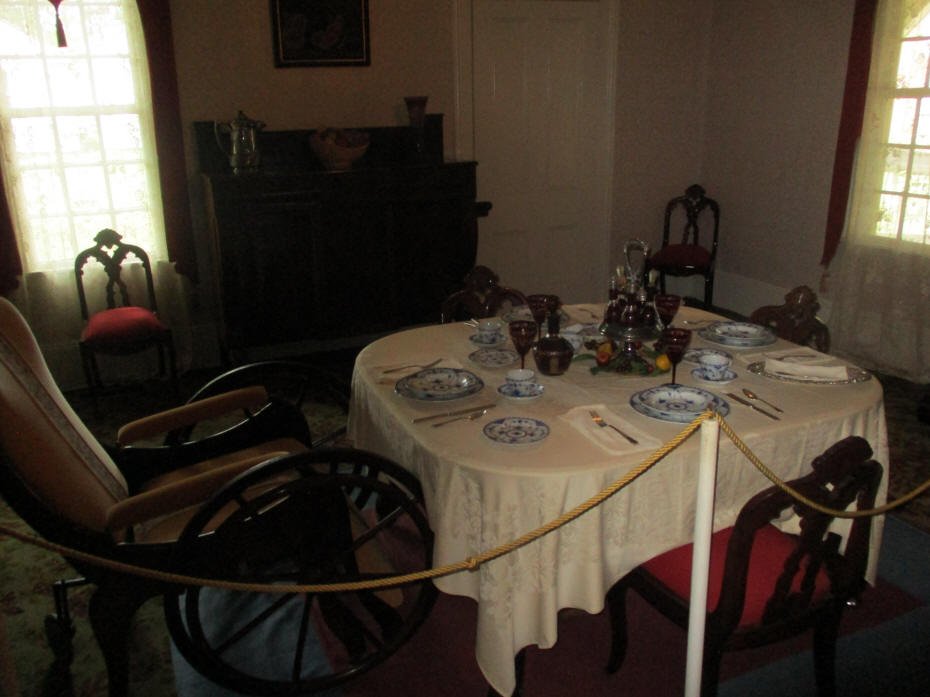
The
dining room.
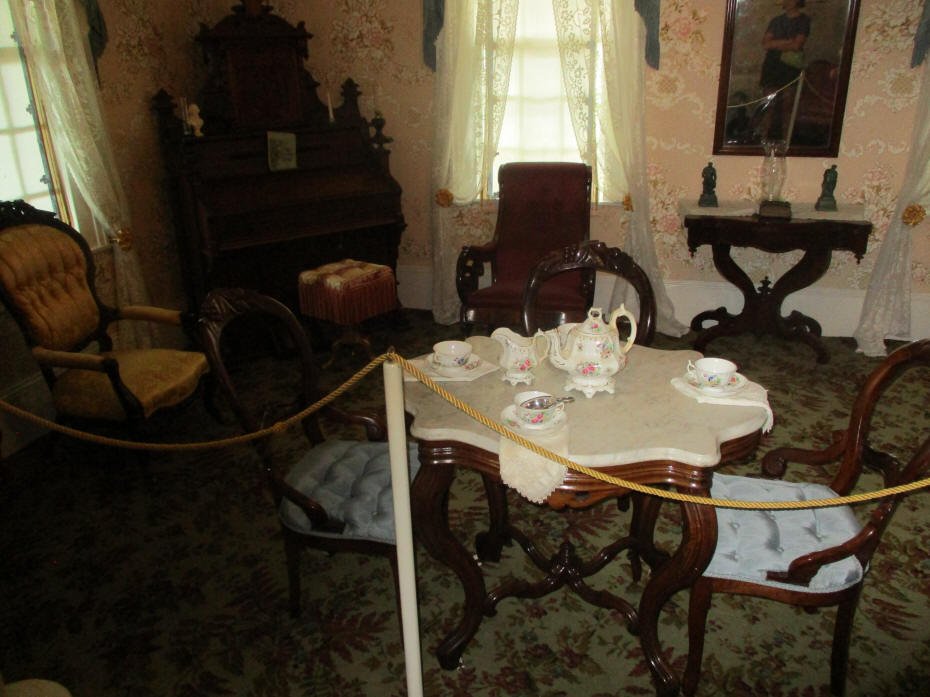
The
parlor.
The
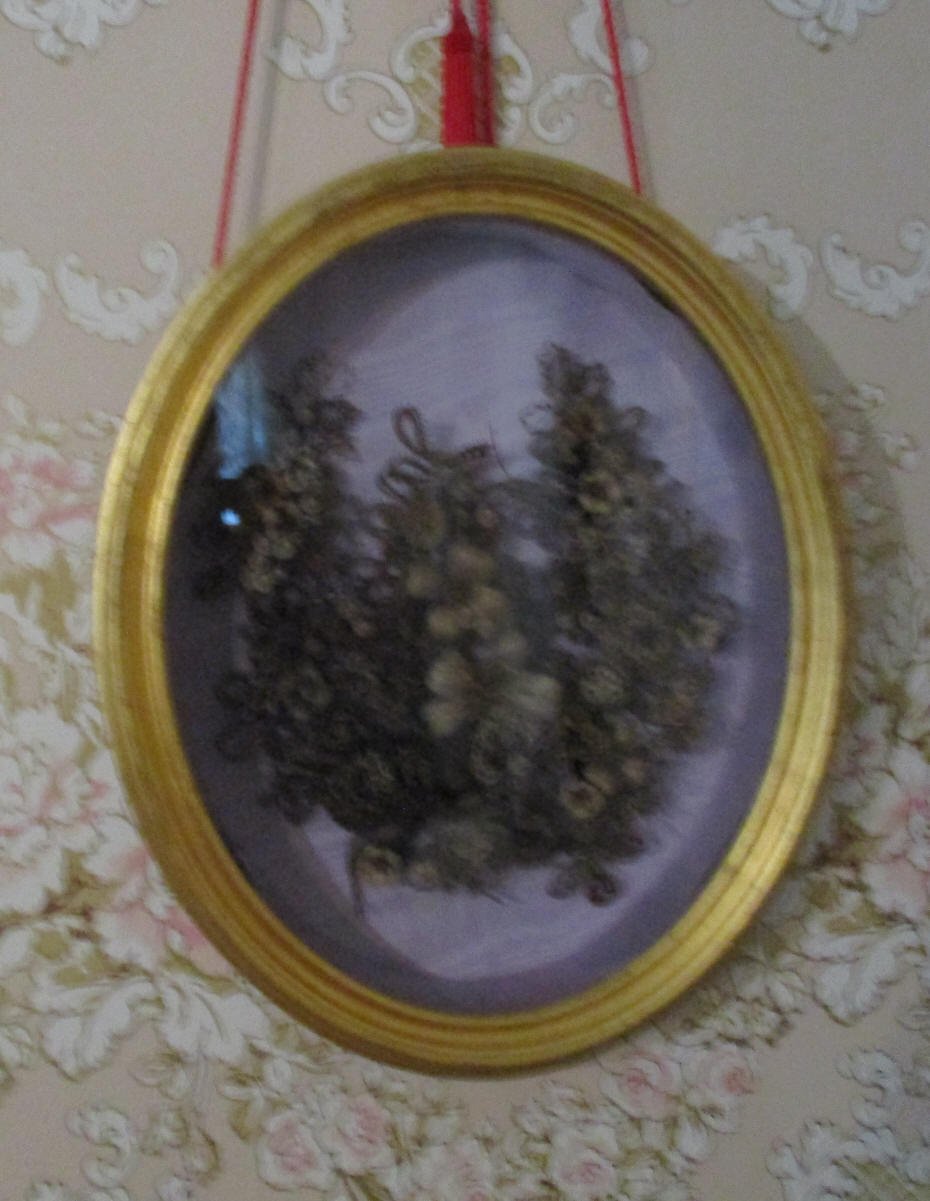
rooms were absolutely full of interesting period objects, with
wonderful stories about them from the guide. Here is mourning
hair art.
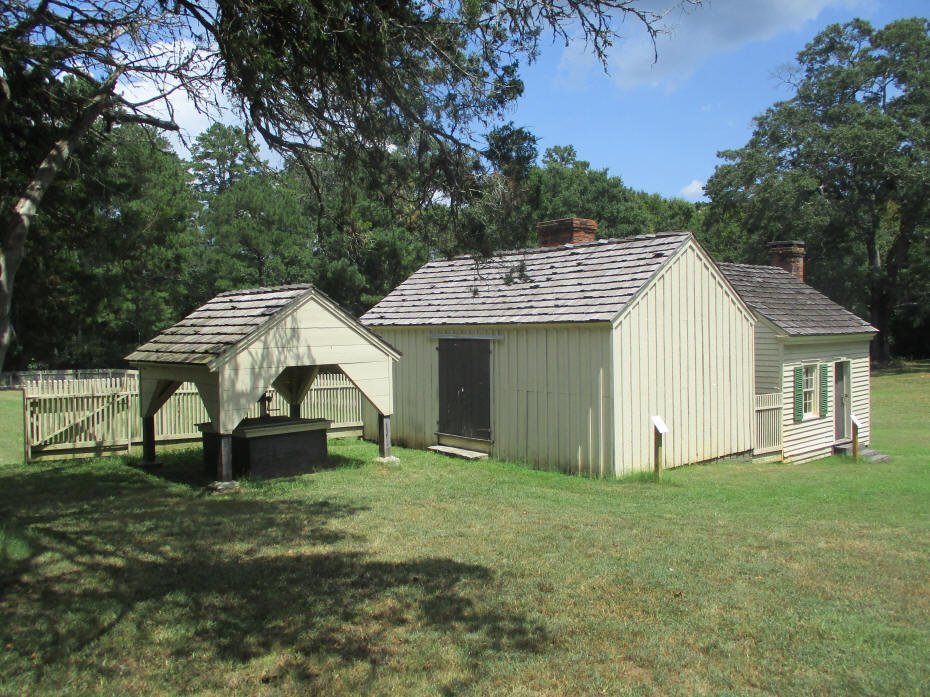
Numerous outbuildings are behind the house. Those are also
furnished.
The State Park has many traditional CCC
buildings. But there are some special structures
that are fascinating. One centerpiece of the park is a
five-story classically-designed observation and fire
tower with white clapboard exterior. This was built by the
WPA. Interestingly, there is a 38-foot-high stone castle-like
fire tower at Fort Mountain State Park. The CCC and WPA built
some engaging structures in the state parks. A usual picnic
shelter and nature trail also stood out to me. With Liberty Hall
and its outbuildings, the Confederate Museum, and all the
natural attractions within the park, it is easy to spend a day
at the park just viewing the sites.
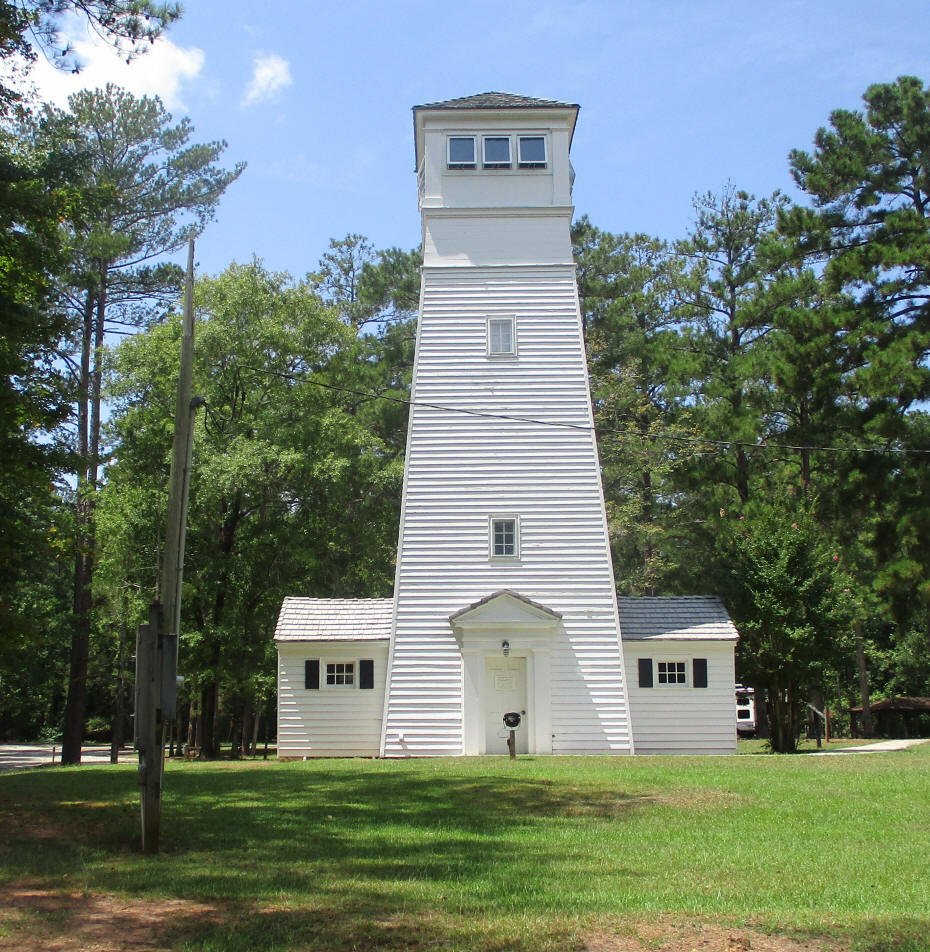
The
60-foot-high observation and fire
tower,
completed in 1935, included a 3,500-gallon water tank which
supplied various park facilities. The water tank was fed from a
nearby pump house and spring house. The architectural styles of
the tower and other park buildings were probably inspired by the
Greek Revival movement popular in the South before the Civil
War. The clapboard exterior has a temple inspired tower cap and
a pedimented front entrance. The interior has tongue and grove
paneled walls, a wooden stairway, and a "warden's room." The
steel frame supports and part of the original water tank still
remain.
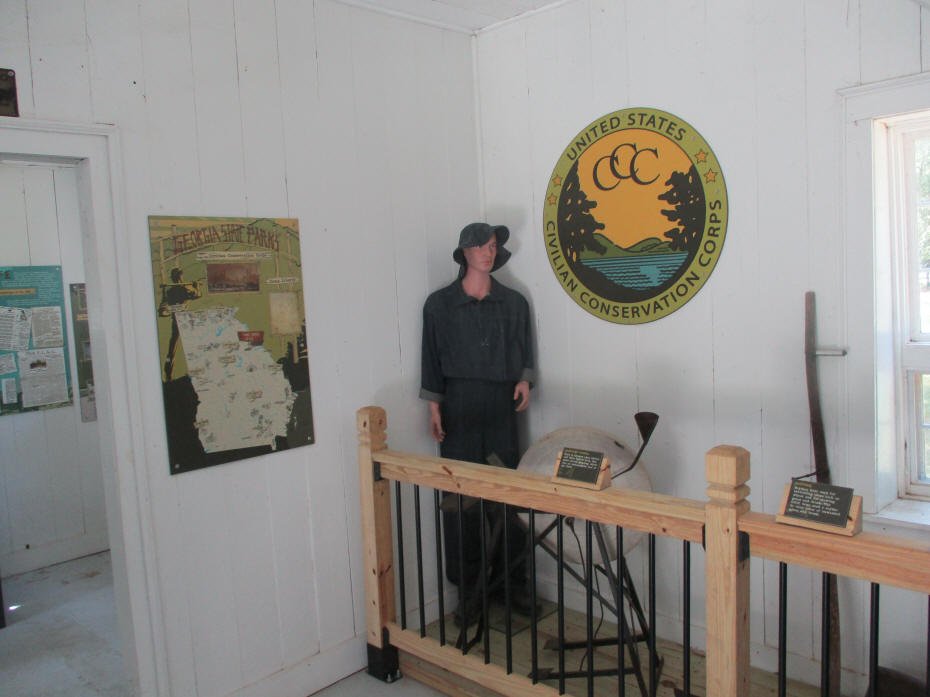
The
inside of the tower is a museum with various displays. The water
tank is effectively also a display.
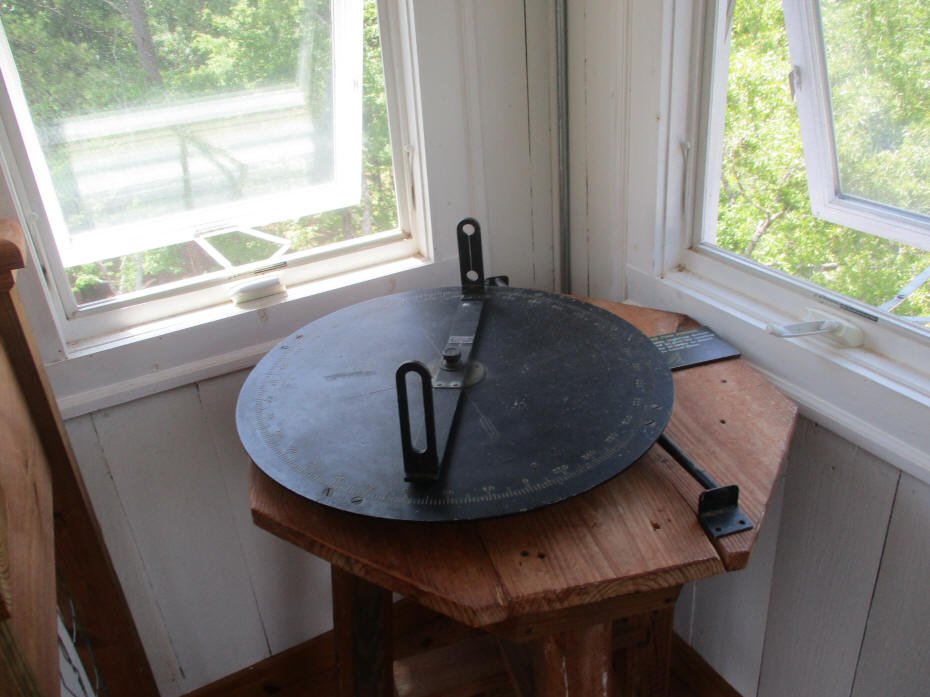
At
the top of the tower is an alidade or fire finder, used to
determine the direction (bearing) to a wildfire location.
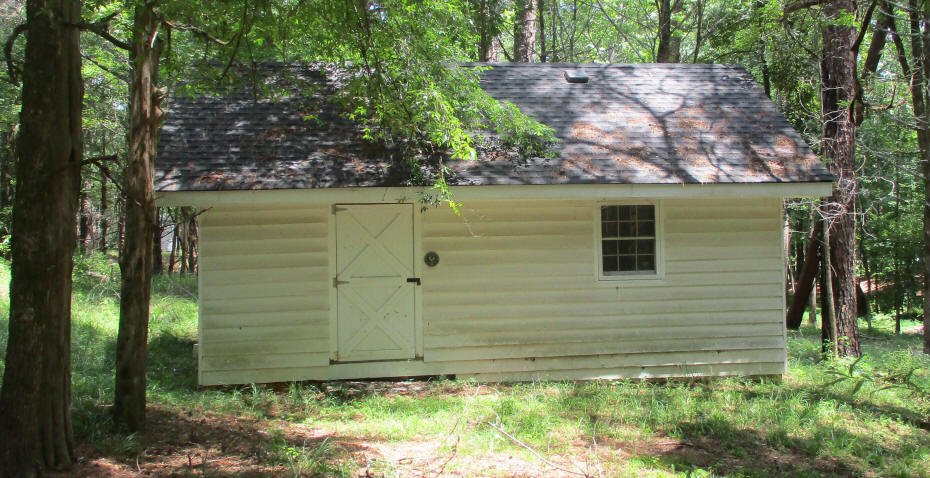 . .
The Pump House
is also clapboard and is just a short distance away, along with
the Spring House.
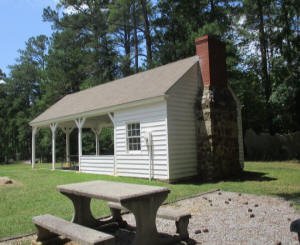
One
of several CCC picnic shelters in the park. Notice the stone
fire pit included as part of the shelter.
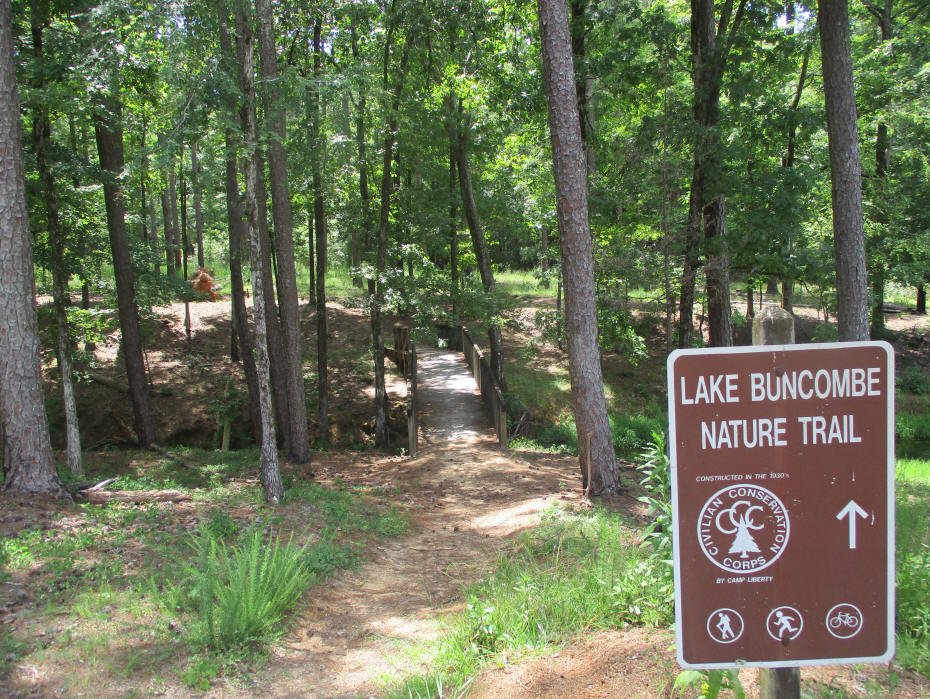
The
CCC also built infrastructure like the nature trail and its
bridges.
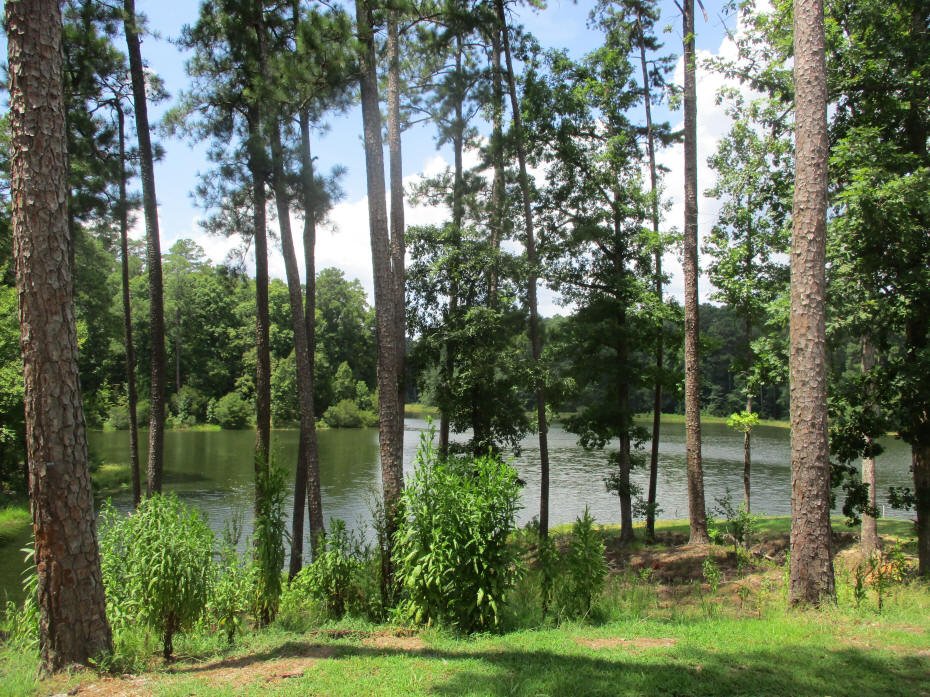
Both
parks have lots of the normal features you'd expect at a park.
The National Park Service usually included at least one lake
within a park by damming a stream. This is Lake Buncombe.
These two state parks are only a few miles
off Interstate 20 and definitely worth a visit if you like New
Deal history, or just rustic parks. CCC state parks offer great
outdoor recreational opportunities with a little history thrown
in.
Author/Photographer. Tom Straka is a
professor emeritus of forestry at Clemson University
in South Carolina. He has an interest in
history, forestry and natural resources, natural history, and the American West.
Public
Disclosure Please Read FTC has a law
requiring web sites to let their readers know if any of the
stories are 'sponsored' or compensated. We also are to
let readers know if any of our links are ads. Most are not.
They are just a way to direct you to more information
about the article where the link is placed. We have several ads
on our pages. They are clearly marked as ads. I think
readers are smart enough to know an ad when they see one but to
obey the letter of the law, I am putting this statement here to
make sure everyone understands. American Roads and Global
Highways may contain affiliate links or ads. Further, as their
bios show, most of the feature writers are professional travel
writers. As such we are frequently invited on press trips, also
called fam trips. On these trips most of our lodging, dining,
admissions fees and often plane fare are covered by the city or
firm hosting the trip. It is an opportunity to visit places we
might not otherwise be able to visit. However, no one tells us
what to write about those places. All opinions are 100% those
of the author of that feature column.
|