New Visitor's
Center in Jacksonville Beach
Story and photos by KathleenWalls
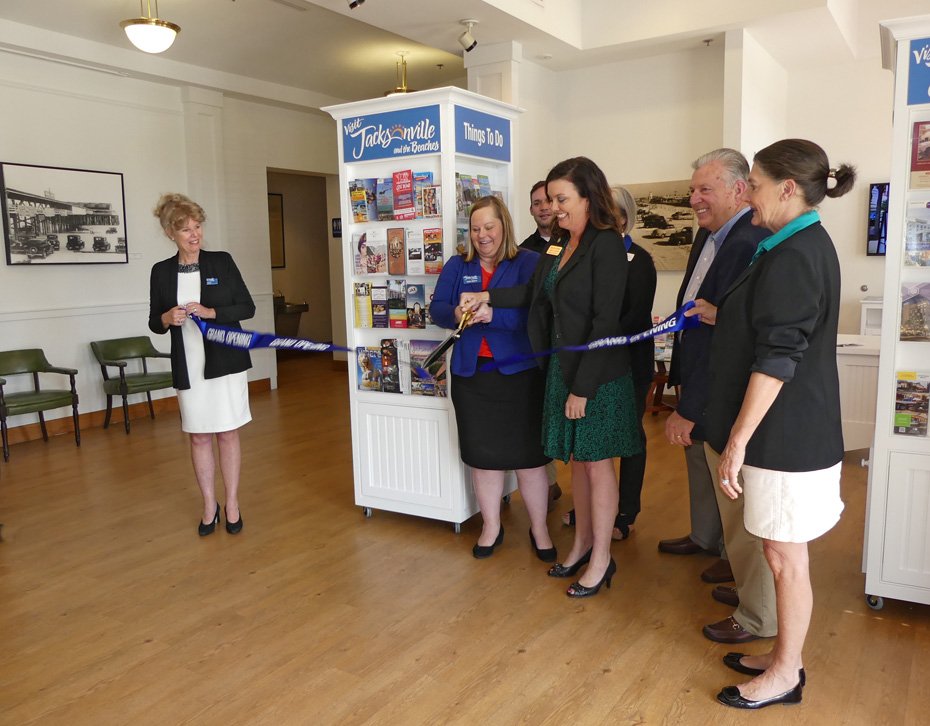
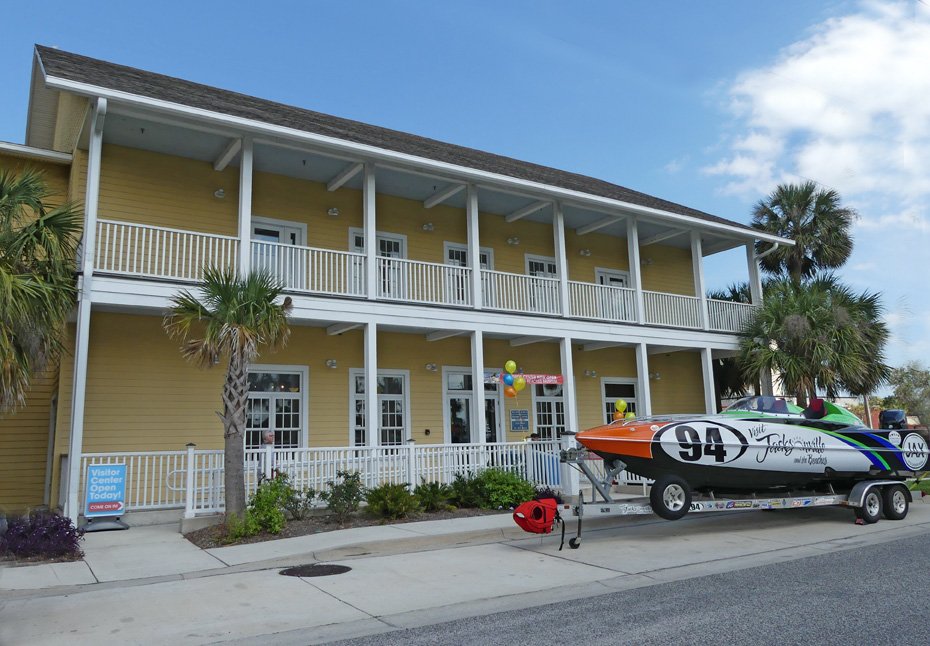
There's a brand new Visit Jacksonville Welcome Center
opened in an old favorite. The new center opened
officially Thursday, April 26th in the Beaches Museum
and History Park. The visitor's center will be open
seven days a week even when the museum is closed. The
event was well attended by local officials, media, and
museum board members. Christine
Hoffman, Executive Director of the museum cut the ribbon
officially opening the center at 4:30 pm.
Jacksonville was rated the only
U.S. city in Lonely Planet's Best Value Destinations
last year. The beaches are just one of the reasons.
There is lots to see besides sun and sand. The Beaches
Museum and History Park is just one example and it's
free. Can't get a better value than that.
 The
museum contains fascinating exhibits about the beaches
history. I learned something I never knew. Jacksonville
Beach was once called Pablo Beach and was the site of a
mining town called Mineral City. George A. Pritchard and
Henry H. Buckman, Junior, discovered the rare minerals
of ilmenite, rutile, and zircon, the components of
titanium, mixed in the beach's hard packed sand. Mineral
City thrived right on that same beach where you can swim
and sunbathe.
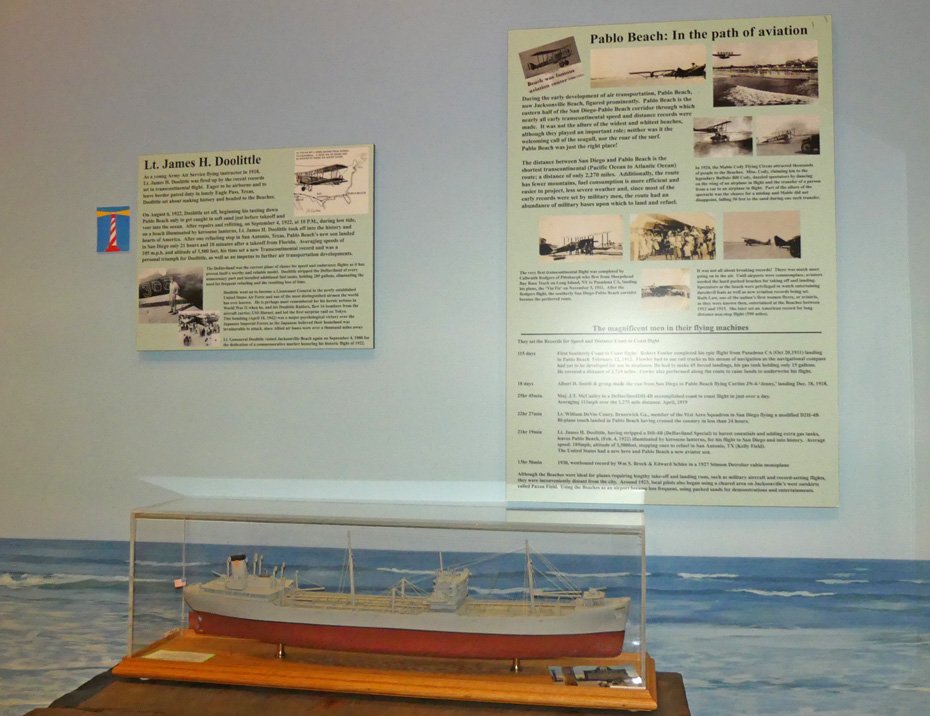 Another
fact I learned at the museum, Lt. James
Doolittle set his transcontinental record flight
launching from the sands of Pablo Beach. He flew from
Florida to San Diego, California in 21 hours and 18
minutes.
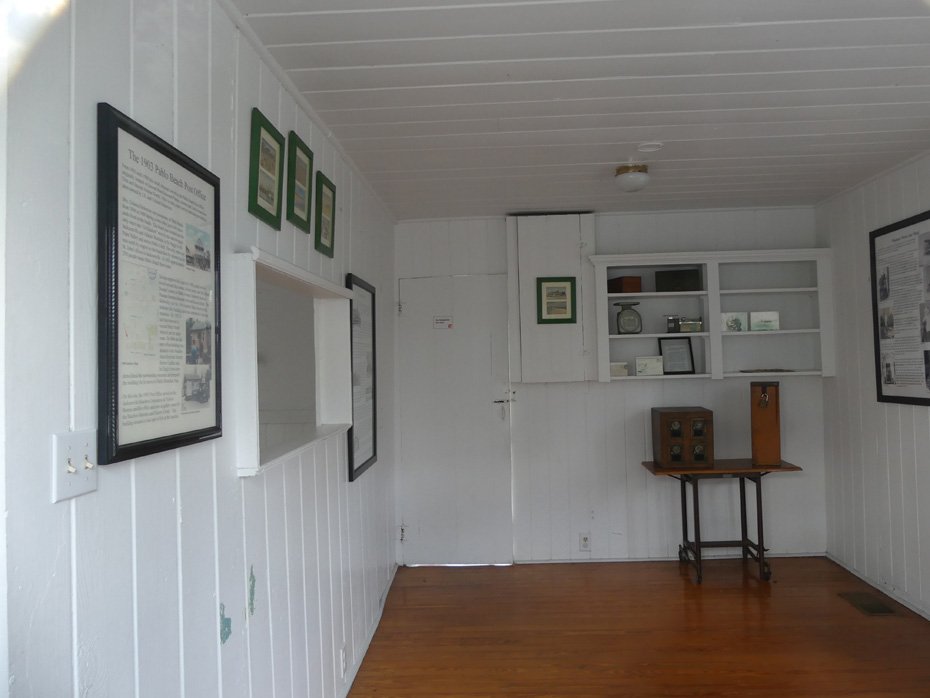 Aside
from the interesting exhibits inside, walk across the
street and visit the Pablo Historical Park. You step
back in time and visit early 20th century
buildings from the Jacksonville area. There is the Pablo
Beach Post Office circa 1903.
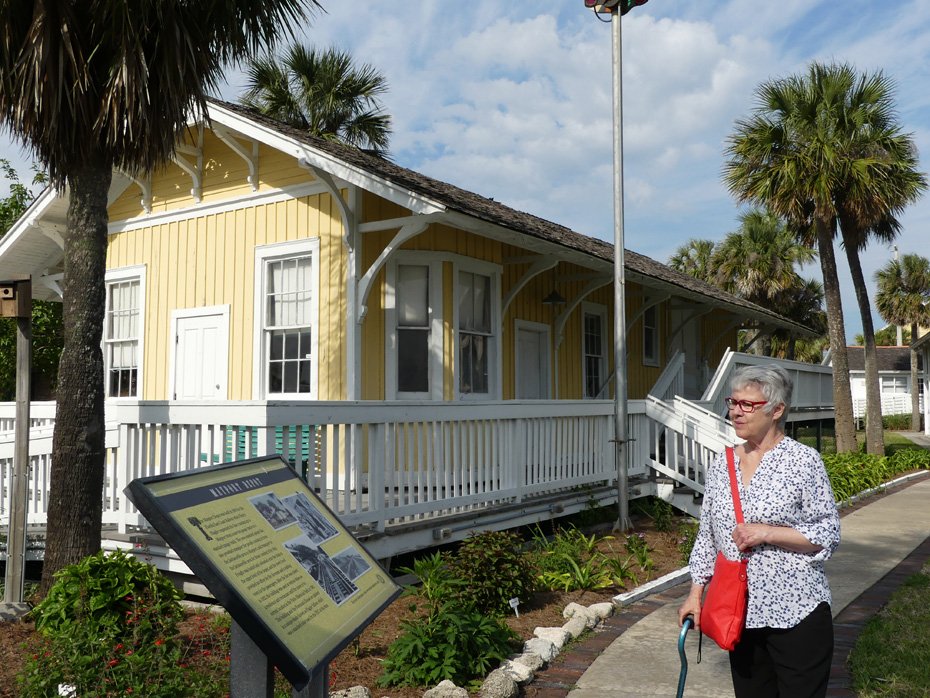 The
railway played an important part in all of Florida's
development. The Mayport Depot was built in 1900 to
accommodate Henry Flagler's ever expanding rail system
into Florida. It was moved here in 1981. Another piece
of railroad history is the Steam Engine Number 7. It
came from the Tampa area but was similar to steam
locomotives used on the beaches Florida East Coast Line.
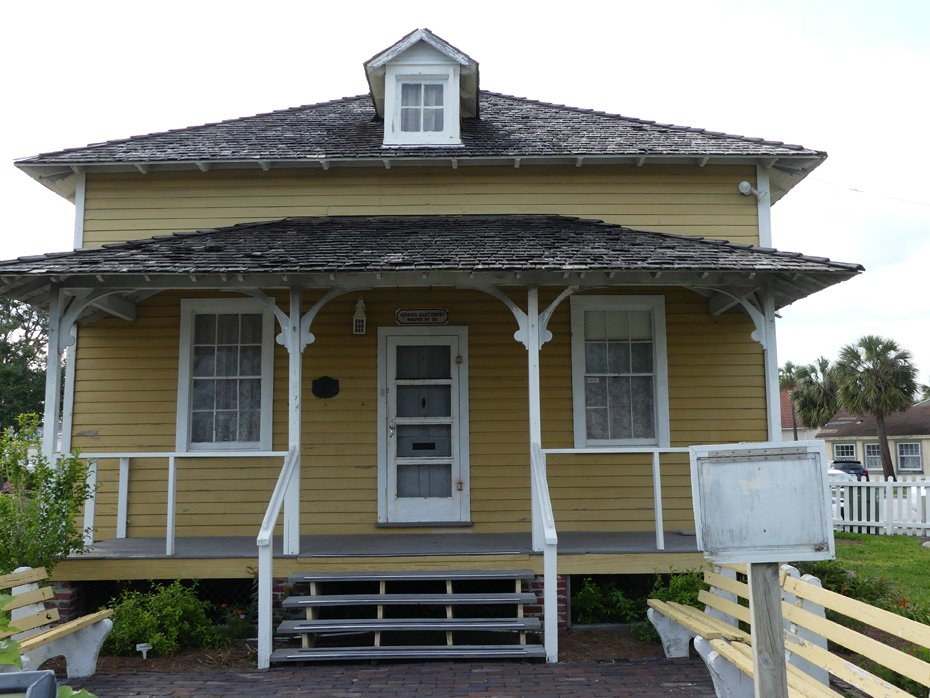 Naturally someone needed to oversee
the operation of the railways. The Foreman's House for
the Florida East Coast Railway was built in 1900 for the
section foreman who oversaw 17 miles of rail line. It
was moved here in 1979. Both the Foreman's House and the
Depot are painted a traditional color used on Florida
East Coast Railway, Flagler Yellow.
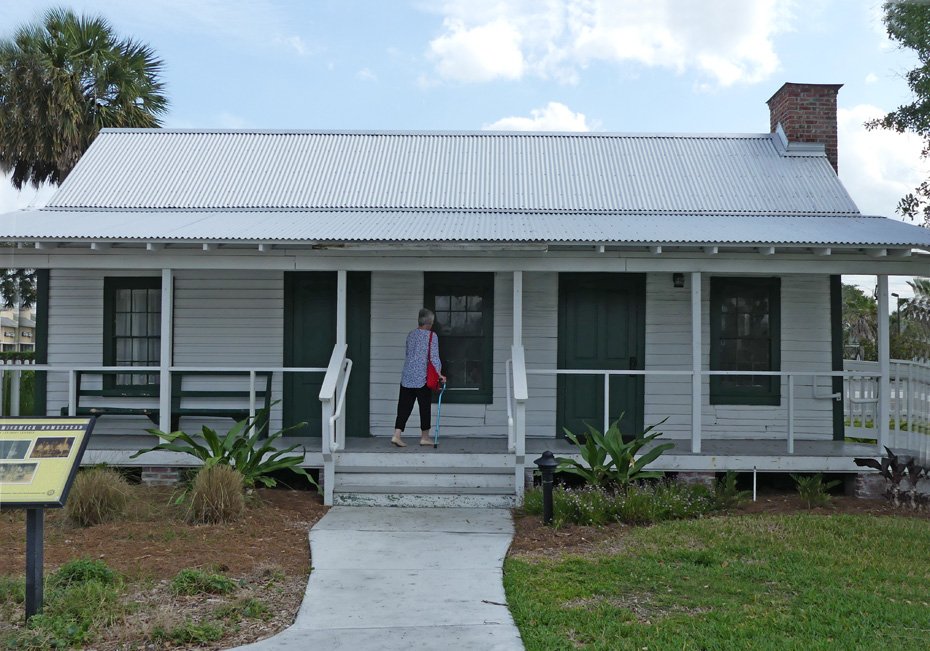 Another home in the park is the
1873 Oesterreicher-McCormick Cabin, one of the area's
oldest examples of Florida Cracker architecture. It
offers a look at pioneer life in Florida.
 Of
course, there is a chapel. It was originally built
in 1887 as St. Paul's By-the-Sea/Beaches Chapel, making
it one of the oldest historical structures in the
beaches area. It can be rented for weddings.
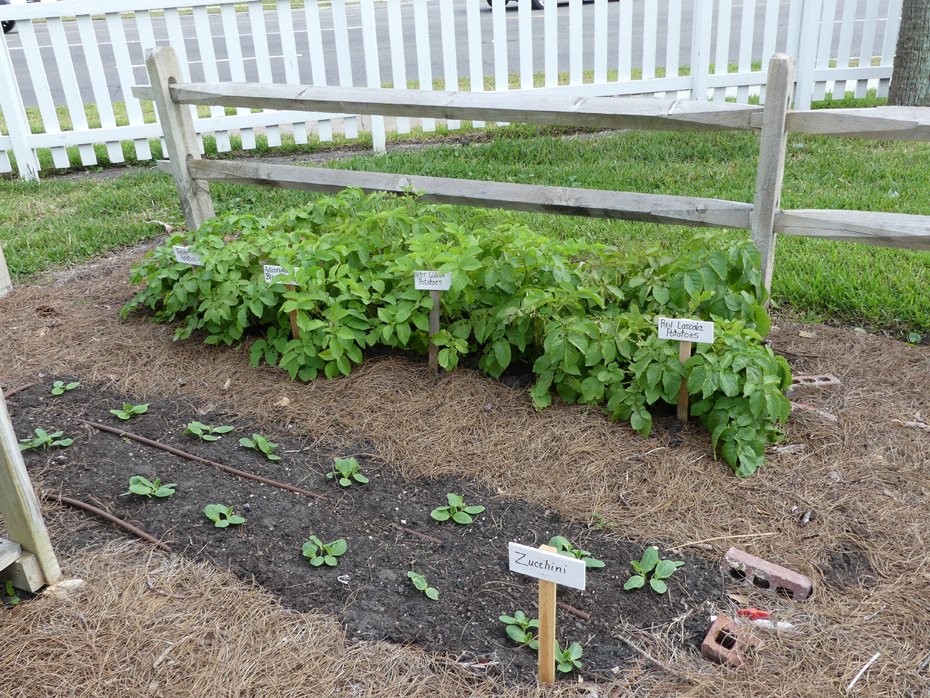 No historic village was without its
home gardens. Pablo Historical Park boasts a garden
including a kitchen and a flower garden. The kitchen
garden grows heirloom vegetables and herbs. The flower
section offers roses, perennial plants, butterfly garden
and many historical native and non-native plants. There
are over 240 varieties of plants here. The garden
changes with every new season.
All wonderful reasons to make this
a mandatory stop when you 'Visit Jacksonville and the
Beaches.'
https://www.visitjacksonville.com
|